
Last updated October 30, 2026
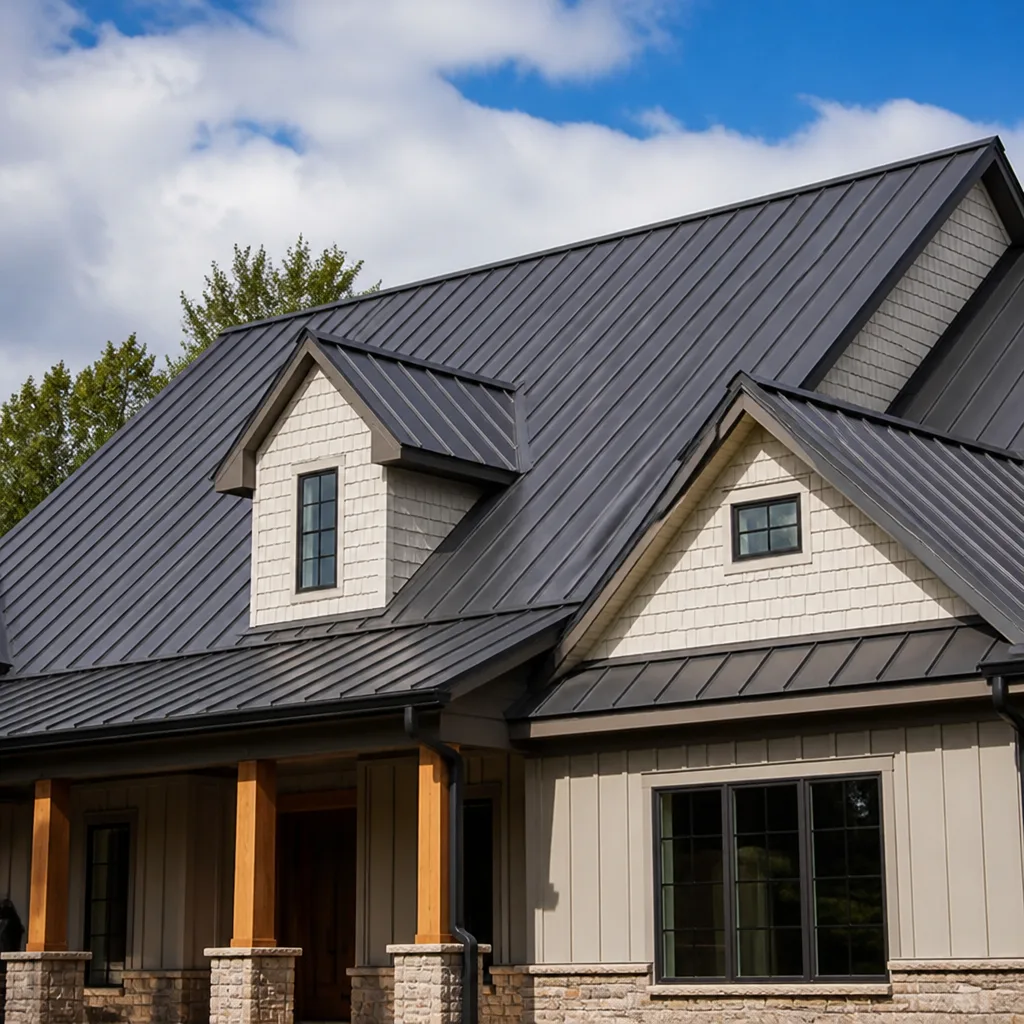 Metal roofing
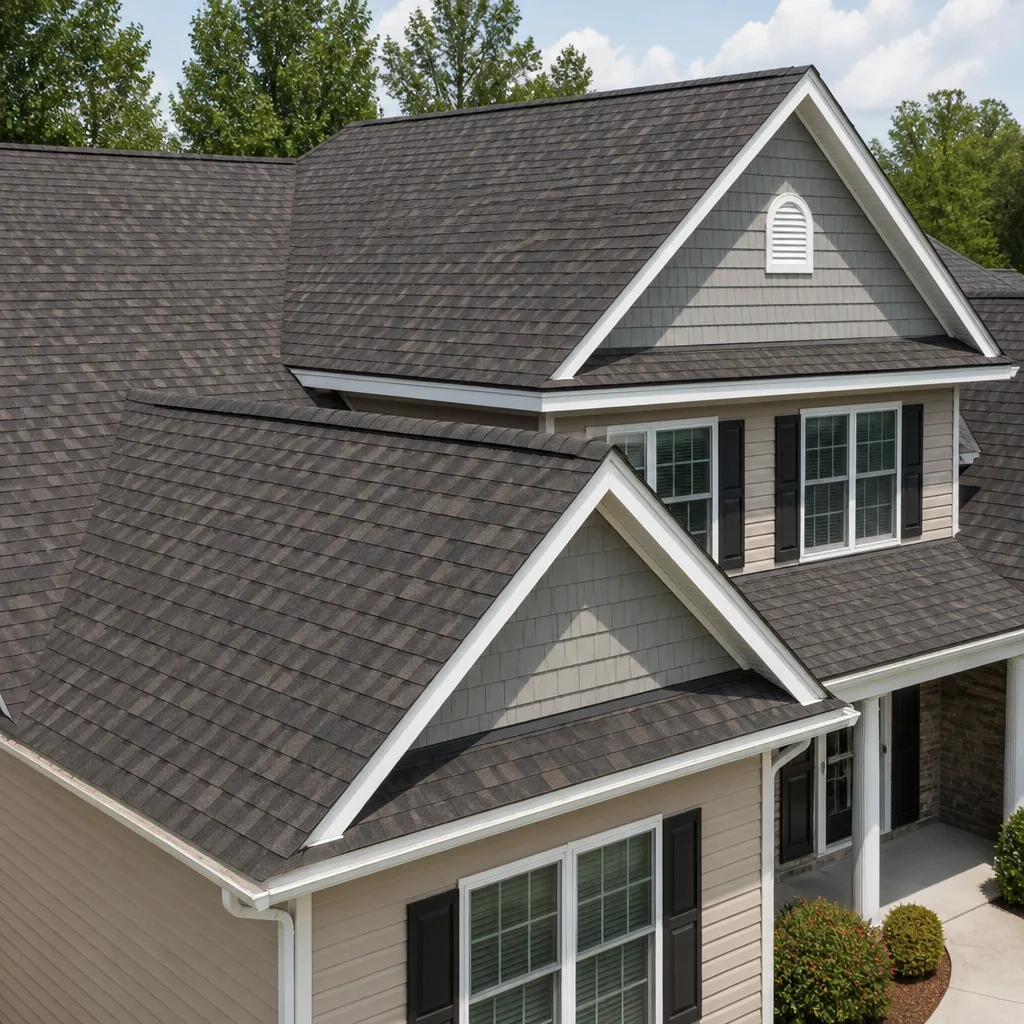 Architectural shingles
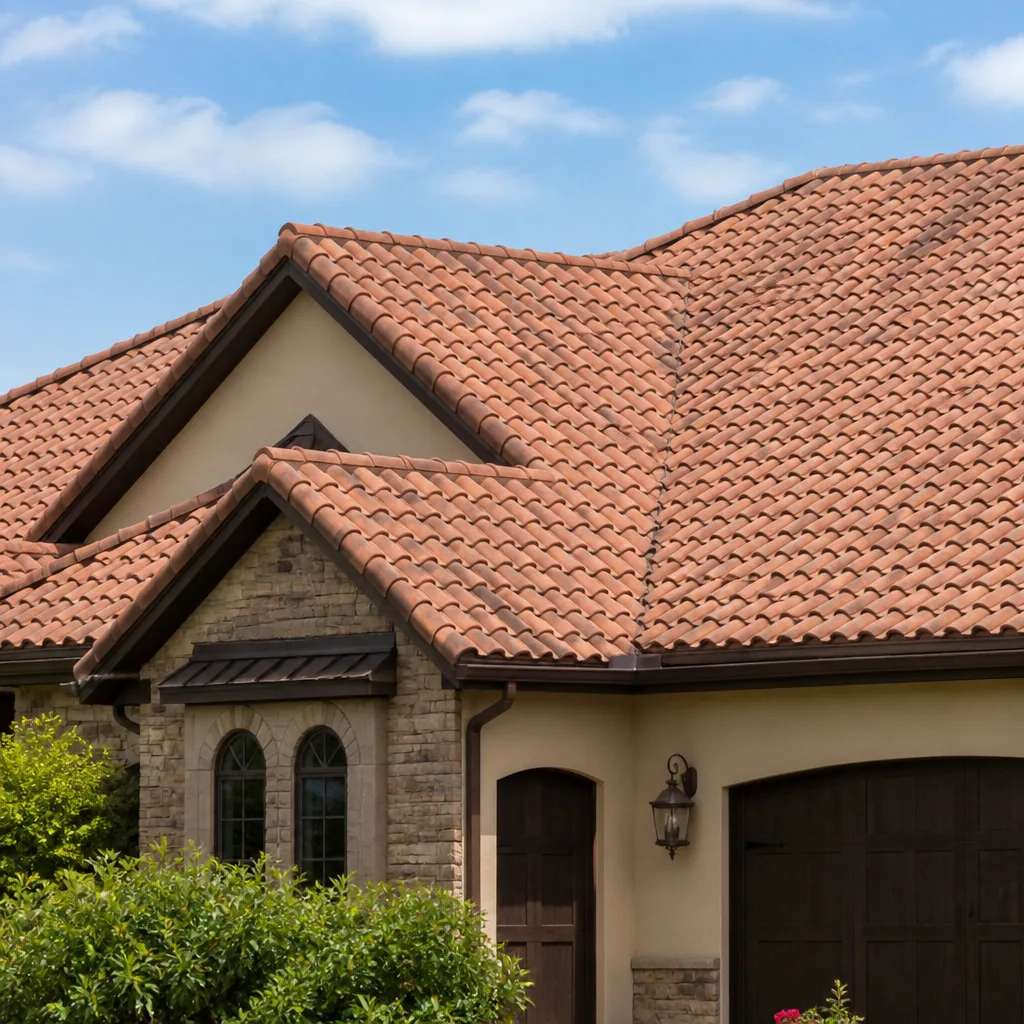 Tile roofing
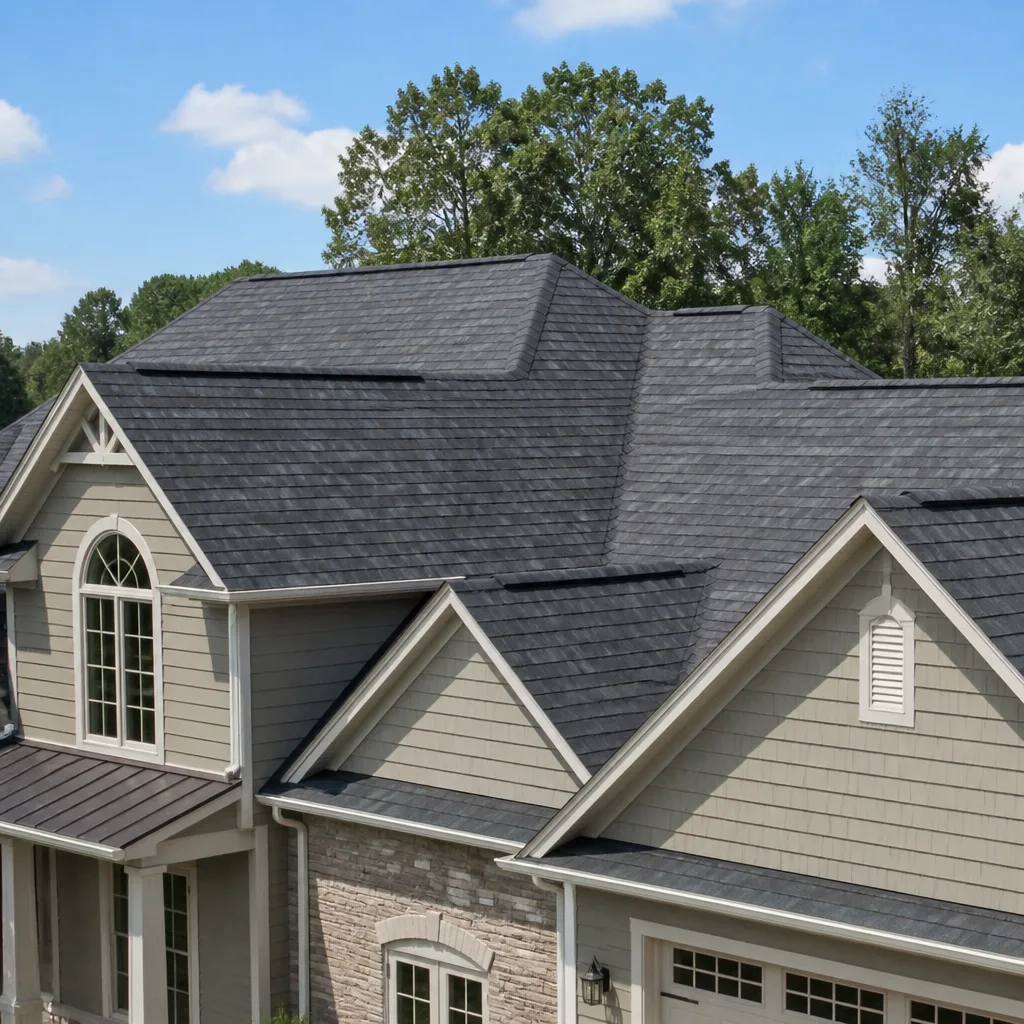 GAF
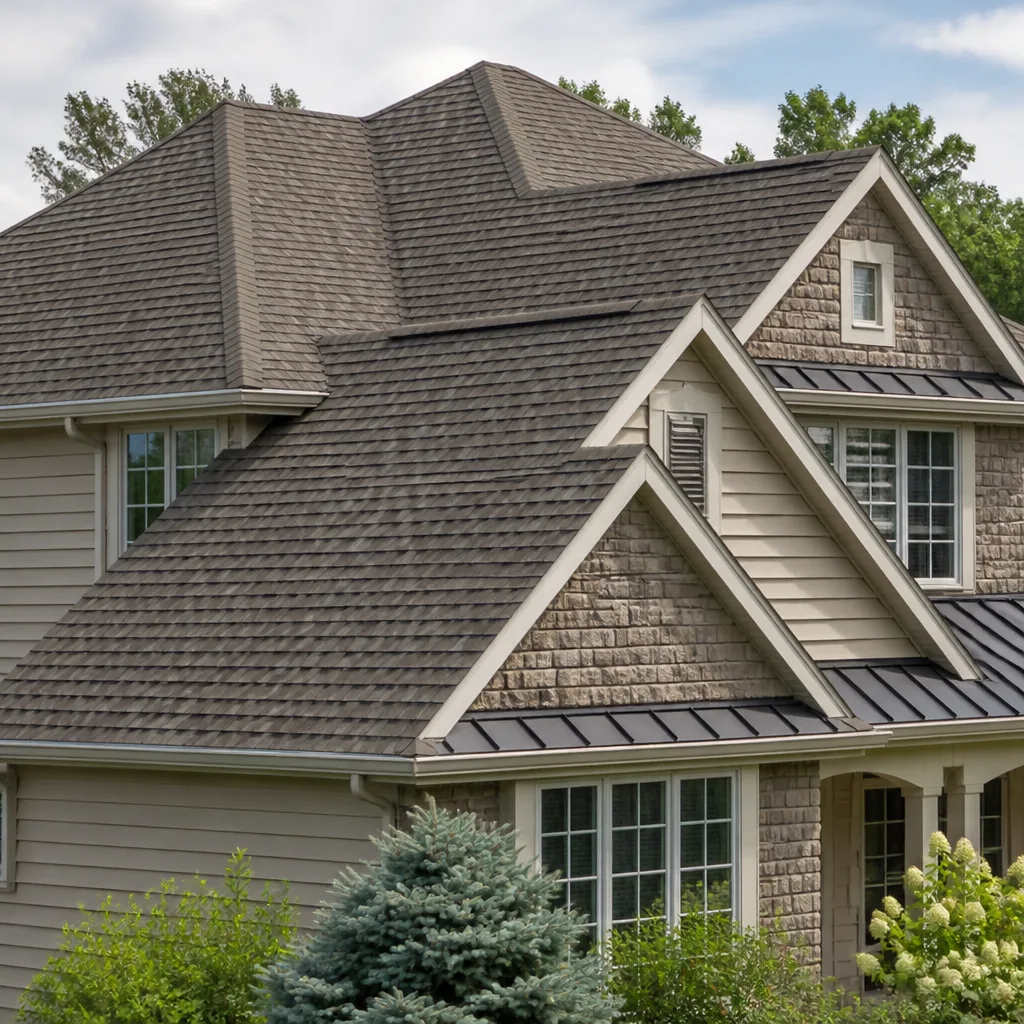 Owens Corning
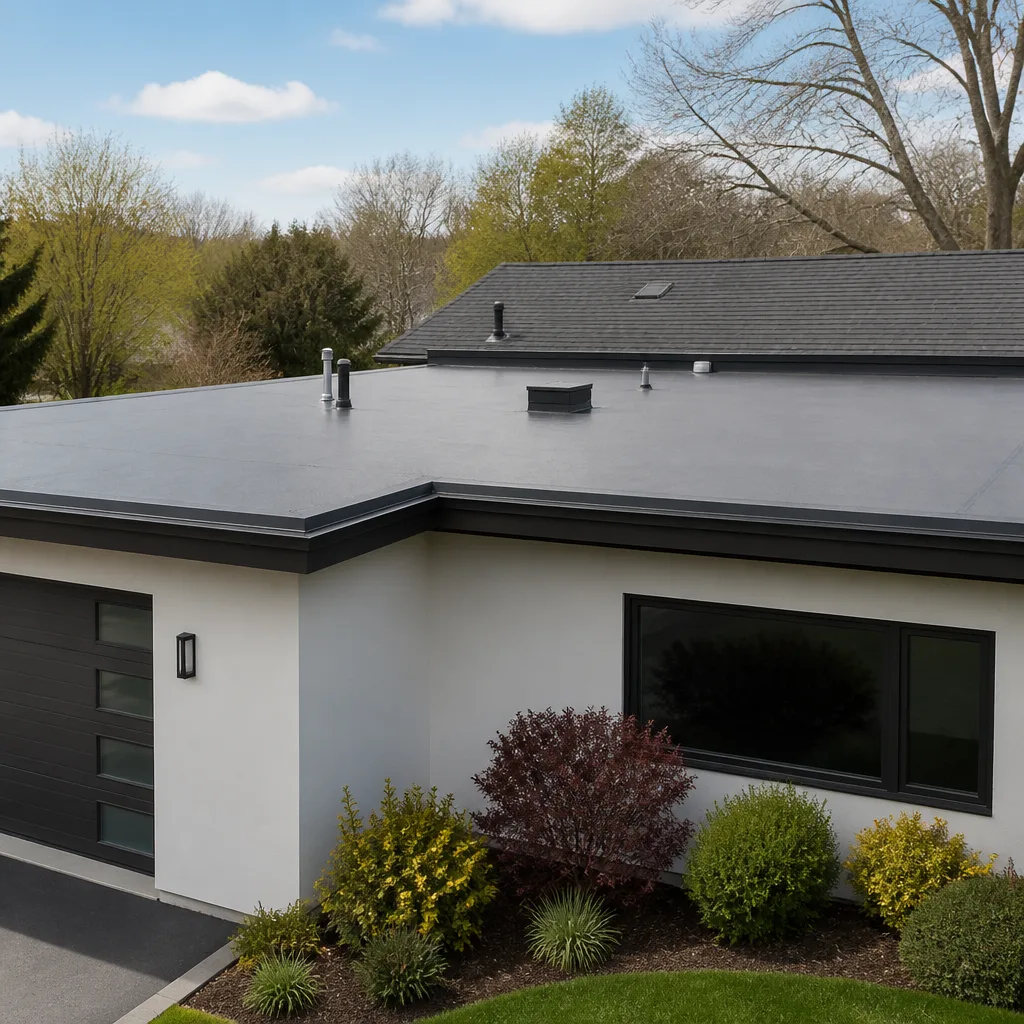 Flat & low-slope
Free roof inspection with deck photos before we talk money - GAF and Owens Corning certified installation
Roofing Cost Breakdown: The El Monte Homeowner’s Reference for 2026
The cheapest roofing quote in El Monte is almost never the cheapest roof. The difference usually shows up three years later, in the underlayment spec that was downgraded, the decking allowance that wasn’t there, or the warranty that isn’t backed by anything real. We’ve torn off roofs in El Monte that were installed less than a decade ago and found rotted decking underneath shingles that looked fine from the street. This guide walks through what a roof actually costs in this city in 2026, line by line, so you can compare quotes without getting taken for a ride, and points you to our Roofing Warning Signs: A El Monte Homeowner’s Reference Guide for spotting trouble early. You’ll learn what drives the price, where low bids cut corners, and how to budget for the unknowns that surface on older El Monte homes.
Styles & brands we work with
Quick Answer
A full roof replacement in El Monte runs roughly $11,000 to $28,000 for a typical 1,200 to 2,200 square foot single-family home in 2026, with most homeowners landing between $14,000 and $21,000. Repairs, by contrast, typically run $350 to $1,800 depending on the damage. The single biggest cost driver is material type: three-tab asphalt is the cheapest, architectural shingles are the mid-range default, and concrete tile or standing seam metal push the number well past $25,000. Labor for tear-off, decking repair, and reinstallation has risen steadily in the San Gabriel Valley supply market, and code compliance on older homes regularly adds $800 to $2,500 that generic quotes never mention.
Table of Contents
- Material Costs by Roofing Type: What El Monte Suppliers Are Charging in 2026
- Why Labor Costs Vary So Much in El Monte: Pitch, Access, and Condition
- The Tear-Off Question: What It Costs and Why It’s Non-Negotiable
- Underlayment and Flashing: Where Low Bids Cut $1,200 Without Telling You
- Decking Replacement: The Mid-Job Surprise on Older Homes
- 25-Year vs. 30-Year Shingles: The Real Cost Math
- How to Read a Line-Item Roofing Quote: Three Places Bids Get Manipulated
- Code Compliance and Permits: The El Monte Factor
- Budgeting for the Unknowns: A Realistic 2026 Plan
- Common Mistakes to Avoid
- When to Call a Professional
- Frequently Asked Questions
- The Bottom Line
Material Costs by Roofing Type: What El Monte Suppliers Are Charging in 2026
El Monte sits in the San Gabriel Valley supply corridor, which means material pricing tracks closely with what distributors in Irwindale, Industry, and Whittier are quoting to contractors. The numbers below reflect what we’re seeing from local suppliers as of early 2026, not national averages that miss the regional markup. Homeowners should know that the material line on any quote is typically 38% to 45% of the total project cost, but it’s also the line that varies most with brand and grade.
Asphalt Shingles: The El Monte Default
The vast majority of El Monte homes wear asphalt shingles, and for good reason. In 2026, three-tab shingles run $95 to $130 per square (a square is 100 square feet of roof area) for materials only. Architectural or dimensional shingles, which are thicker and carry better wind ratings, run $140 to $210 per square. The material cost difference between these two on a 1,800 square foot home is roughly $900 to $1,500, but the architectural shingle typically adds 10 to 15 years of service life and looks substantially better on the span of a San Gabriel Valley ranch home. We recommend GAF Timberline, CertainTeed Landmark, or Owens Corning Duration as the mid-range architectures that dominate the El Monte market. IKO’s Cambridge line shows up at a lower price point, and Atlas Pinnacle sits between the two.
One local factor: El Monte’s hot, dry summers with occasional heavy winter storms mean shingle granule retention matters more than anything else. Cheaper shingles shed granules faster under UV exposure, and after five El Monte summers, the difference is visible on the roof surface and in your gutters after rain.
Concrete Tile: Common on Older El Monte Homes
El Monte has a significant stock of mid-century homes with concrete tile roofs, particularly in the neighborhoods south of Valley Boulevard and around Mountain View. Concrete tile is heavy, lasts 40 to 70 years, and runs $340 to $520 per square for materials alone in 2026. The full replacement cost for a 1,800 square foot tile roof typically lands between $27,000 and $42,000, and the labor component is much higher because tile installation is slower and more exacting. If your existing tile roof has a failing underlayment, you may not need to replace the tile itself; a lift-and-relay (removing tile, replacing underlayment, reinstalling the same tile) costs 35% to 50% less than full tile replacement.
Standing Seam Metal: Growing in El Monte
Standing seam metal is still uncommon in El Monte but gaining traction on higher-end renovations and for homeowners who plan to stay 20-plus years. Material costs run $420 to $650 per square, with full installation typically landing between $24,000 and $38,000 for a 1,800 square foot roof. Metal’s advantage in this climate is real: it reflects UV, doesn’t hold heat the way asphalt does, and carries a service life of 40 to 60 years. The El Monte-specific drawback is cost and the smaller pool of qualified installers.
Flat Roof Systems: The Other El Monte
A surprising number of El Monte homes have flat or very low-slope roof sections, especially on additions, carports, and the occasional mid-century modern. For these, the 2026 options break down as follows: rolled asphalt or modified bitumen at $180 to $260 per square, single-ply membrane (TPO or PVC) at $280 to $400 per square, and coated systems at $150 to $220 per square. If a home has both pitched and flat sections, the flat portion is often where leaks in El Monte start, because ponding water after winter rains finds every gap in aged flashing.
Material Comparison Table: 2026 El Monte Pricing
The table below summarizes installed cost per square (100 square feet) for the systems described above, with notes on what each range assumes. These numbers are for a straightforward replacement on a single-story home with standard pitch and no decking surprises.
- Three-tab asphalt: $300 – $380 per square installed. Cheapest entry point. Shortest service life. Highest long-term cost.
- Architectural asphalt: $390 – $520 per square installed. The default recommendation for most El Monte homes. Best 25- to 30-year value.
- Concrete tile (new): $780 – $1,050 per square installed. Long service life. Heavy; requires structural check first.
- Standing seam metal: $890 – $1,200 per square installed. Most expensive. Longest service life. Best UV performance.
- Modified bitumen (low slope): $320 – $460 per square installed. Standard for flat sections. Verify underlayment spec.
Where the Brand Names Actually Matter
Homeowners often ask whether the shingle brand matters. The honest answer: yes, but less than the installation quality. GAF, CertainTeed, and Owens Corning are the three we install most in El Monte. Their mid-tier architectural lines all perform comparably in San Gabriel Valley weather, and all three offer manufacturer warranty upgrades when installed by a certified contractor. IKO, Atlas, and Tamko are value-tier options that save $15 to $35 per square and are perfectly acceptable on budget-conscious projects. We carry all of them. The brand decision should come after the roof condition, decking status, and budget are understood, not before. Material choice is the homeowner’s right, not the contractor’s convenience. If a contractor only offers one brand, you’re buying their inventory, not your roof.
One more El Monte note: this city’s characteristic ranch homes with 4/12 to 6/12 pitches rarely see the extreme wind that high-profile coastal sites do. But El Monte sits at the base of the San Gabriels, and Santa Ana events can funnel winds through the Whittier Narrows corridor at speeds that tear three-tab shingles. This is a real, local reason to consider architectural shingle lines with better wind ratings, particularly on east-facing roof slopes.
Why Labor Costs Vary So Much in El Monte: Pitch, Access, and Condition
The labor line on an El Monte roof quote swings anywhere from $220 to $420 per square, and that range is what separates quotes that look identical but differ by $6,000. The factors below are what we weigh when we walk a roof in this city, and they’re what a homeowner should understand before comparing two bids side by side.
Roof Pitch: The First Multiplier
Most El Monte ranch homes sit at 4/12 pitch, which is a comfortable walk for a roofing crew. But a split-level in north El Monte or a two-story near the San Gabriel River bed might present a 7/12 or steeper section, and steeper roofs slow labor by 25% to 50%. A crew that can tear and re-install 8 squares a day on a shallow pitch might manage 5 on a steep one, and that time is real money. Quotes for steep roofs also include more safety equipment and higher insurance exposure.
Access: The Overlooked Line Item
El Monte lots are mostly 50-foot-wide suburban parcels with a side yard, but the city’s older blocks near the Whittier Narrows have narrow side gates, mature trees, and single-lane driveways. If a crew cannot park a trailer close to the roof, every bundle of shingles gets hand-carried, and every torn-off layer gets wheelbarrowed to the front. Access problems add 10% to 20% to the labor line on an otherwise straightforward replacement. Quotes that do not mention access are either lucky or have not looked at the job.
Existing Layers: The Tear-Off Multiplier
A roof with one layer of shingles tears off fast. A roof with two layers, or a layer over old wood shake, tears off slow. Code in El Monte generally prohibits a third layer, and many of the city’s mid-century homes carry an original shake layer under a later shingle overlay. When we hit that condition, the tear-off cost nearly doubles because shake removal is tedious and the resulting debris is heavy. If your home was built before 1970 and has never had a full tear-off, budget for this.
Decking Condition: The Silent Factor
El Monte’s flat roofs from the 1950s and 1960s often have spaced board decking or aging plywood that has been soaked by decades of rain events. We’ll cover decking replacement in its own section, but the labor implication here is that thin, splintered, or spongy decking slows installation. Nailing fresh shingles onto compromised wood is a slower process, and the crew will hit it with a full re-deck before they can move at normal speed.
The Bottom Line on Labor
We tell El Monte homeowners this: two contractors can both put the same material line on a quote, but if one has walked the roof and one has not, the labor numbers will not match. The one who walked the roof is pricing reality. The one who hasn’t is pricing a guess, and the guess is usually low, to be corrected with a change order later. Roof inspection in El Monte is a standalone service for exactly this reason: the numbers in a quote should come from looking at the roof, not from a satellite photo.
The Tear-Off Question: What It Costs and Why It’s Non-Negotiable
Tear-off is the line item some contractors omit entirely, and that omission is the single most common reason an El Monte homeowner thinks they’ve found a bargain. A quote that includes only “re-cover” or “lay-over” is pricing a second layer of shingles over the existing roof, not a new roof. Here is the straightforward math.
What Tear-Off Costs in 2026
Complete tear-off and removal of a single existing shingle layer runs $75 to $130 per square in El Monte, including dump fees. For a standard 1,800 square foot roof, that’s $1,350 to $2,340. If there are two layers, the number climbs to $2,200 to $3,600. If there’s an original wood shake layer, the number can exceed $5,000 on its own. These are 2026 prices from San Gabriel Valley haulers, and they’ve risen with landfill fees and fuel costs.
Why Re-Cover Is Almost Always the Wrong Call in El Monte
Laying a second shingle layer over the first saves the tear-off cost and half the labor, which is why it shows up on low bids. The problems in this climate are concrete. First, El Monte summer heat bakes the underside of the new shingles against the old layer, shortening the new roof’s service life by roughly a third. Second, you cannot inspect or replace the underlayment without removing the old layer, which means a re-cover leaves whatever is underneath in place, new shingles on old problems. Third, re-covering adds a second layer of weight to a roof deck that was engineered for one. On an older El Monte home with 2×4 rafters, that extra weight matters during an earthquake. We do not re-cover. We’ll walk away before we sell a second layer to a homeowner in this city, because we know what the roof will look like after five El Monte summers.
If budget is the issue, we’d rather recommend a roof repair in El Monte on the damaged sections and a phased plan, than hide a problem under a second shingle layer.
Underlayment and Flashing: Where Low Bids Cut $1,200 Without Telling You
Underlayment is the waterproofing membrane that sits between the decking and the shingles. It is invisible once the roof is complete, and that’s exactly why it’s the first place a low bid trims cost. In 2026, we see three spec levels on El Monte quotes: 15-pound felt, 30-pound felt, and synthetic.
What Each Underlayment Level Costs and Means
- 15-pound felt: $18 to $25 per square. The economy spec. It tears easily during installation, absorbs moisture, and is genuinely insufficient for a roof in the San Gabriel Valley’s winter rain pattern. If a quote specifies 15-pound, the contractor is cutting a corner to win the bid.
- 30-pound felt: $25 to $32 per square. The mid-range spec, adequate for most El Monte roofs. It’s heavier, resists tearing better, and has been the standard for decades.
- Synthetic underlayment: $35 to $55 per square. The modern upgrade. Synthetic is lighter, stronger, UV-resistant, and lays flatter. It costs roughly $10 to $20 more per square than 30-pound felt, or $180 to $360 across a standard roof, and it’s what we recommend on any El Monte home that’s expected to keep its roof for 20-plus years.
The number that matters here: the difference between 15-pound felt and synthetic on a typical El Monte home is about $1,200. When you see two quotes that differ by exactly that amount, look at the underlayment line. One is protecting the decking. The other isn’t.
Flashing: The Other Silent Skimp
Flashing is the metal that seals roof penetrations: chimney bases, vent pipes, valleys, and wall intersections. In El Monte, where winter rain can come in concentrated bursts, flashing is where leaks begin. Standard galvanized flashing at all penetrations on a typical home runs $350 to $700 installed. Upgraded copper or powder-coated flashing triples that, and the upgrade is cosmetic as much as functional. What actually matters is not the metal but the installation method: flashing should be stepped and counter-flashed at walls, not simply caulked. We’ve repaired enough El Monte roofs to know that a tube of sealant is not a flashing system.
Decking Replacement: The Mid-Job Surprise on Older Homes
Decking is the structural layer under the shingles and underlayment, typically plywood or oriented strand board on modern roofs and spaced board or tongue-and-groove on mid-century El Monte homes. When the decking is rotten, water-damaged, or broken, code requires replacement before new roofing can be installed. This is the single most common mid-job cost on El Monte homes built before 1980.
What Re-Decking Costs in 2026
Replacing decking runs $3 to $5 per square foot for the removed and replaced area. On a full 1,800 square foot roof, complete re-decking costs $5,400 to $9,000 on top of the roofing quote. Most El Monte homeowners do not need complete re-decking, though. The typical pattern is 20% to 40% of the deck being damaged, usually around the valleys, eaves, and penetrations where water has collected or flashed poorly. That scoped repair runs $1,100 to $4,000.
Why Quotes Can’t Always Predict This
We walk every roof replacement in El Monte before pricing, and we look for the warning signs: soft spots, water stains on the attic side, delaminated plywood edges. But no one can see under the shingles until they come off. This is not a contractor trying to surprise you mid-job; it’s the price of honesty on a roof that has been absorbing Los Angeles County weather for 50 years. The contractors who quote the decking as a fixed line item are either guessing or they’ve already priced a big enough allowance to cover the risk. A good quote includes a per-sheet or per-square-foot decking allowance, with a “if used” clause. That’s how you know you’re dealing with someone who’s done this before.
The El Monte Reality on Mid-Century Decks
This city’s housing stock was largely built between 1947 and 1965. Those homes used 1×6 spaced board decking over 2×4 or 2×6 rafters. Code in 2026 requires solid decking for new shingles in most cases, which means the old spaced board almost always triggers an overlay of plywood before the underlayment goes down. On a 1,400 square foot mid-century ranch, adding a plywood overlay costs $1,800 to $3,200, and it’s not optional. The good news: that overlay stiffens the roof and gives the new shingles a much better substrate, and it’s a significant structural upgrade for earthquake country.
25-Year vs. 30-Year Shingles: The Real Cost Math
The pitched question on every El Monte roof quote is whether to step up from a 25-year shingle to a 30-year. The marketing makes it sound like a five-year difference. The math is starker than that, and the installed cost difference is smaller than homeowners expect.
What the Upgrade Actually Costs Installed
On a standard 1,800 square foot El Monte home, a 30-year architectural shingle (think GAF Timberline HDZ or CertainTeed Landmark Pro) runs about $370 to $520 per square installed, while a 25-year architectural shingle (IKO Cambridge or Atlas Pinnacle is a fair comparison) runs $350 to $470. The total difference is $1,800 to $2,700 on a full replacement, not the $4,000 to $5,000 some contractors charge for the “premium” line. The shingle itself is the cheapest part of the roof; labor, underlayment, and tear-off don’t change with the shingle grade.
What the Service Life Numbers Actually Say
A 25-year shingle on an El Monte roof will typically deliver 18 to 22 years of real service life before it needs attention. A 30-year architectural will deliver 24 to 28 years. The difference is six to eight years of additional service for a $1,800 to $2,700 upfront investment, which pencils out to roughly $250 to $450 per additional service year. That is, in our experience, the best value upgrade on the entire quote. It is cheaper per service year than any other line item, and it matters in this city because El Monte’s UV and heat exposure ages shingles faster than the national average.
We also flag this: manufacturers’ warranty coverage is tied to the shingle line and the installer’s certification. A GAF or CertainTeed warranty backed by a certified installer is enforceable. A “warranty” from an unbranded contractor who may not be in business in five years is a piece of paper. We carry both premium (GAF, CertainTeed, Owens Corning) and value-tier (IKO, Atlas, Tamko, Boral) lines so the recommendation comes from your budget and roof condition, not from what we happen to have in the yard.
How to Read a Line-Item Roofing Quote: Three Places Bids Get Manipulated
A roofing quote in El Monte should be a line-item document, not a single number on a contract. The line-item structure is where you can see exactly what you’re paying for, and it’s also where low bids hide their shortcuts. Here are the three places to look.
1. The Tear-Down Line
Does the quote include tear-off of the existing roof, with a specific number of layers? Does it include disposal and dump fees? A quote that says “tear-off: included” without a spec is not a line-item quote. If the number of existing layers is not stated, the contractor has not confirmed what they will be removing, and the cost will change once the crew starts pulling shingles. Ask for the tear-off line to read: “Remove [one/two] existing shingle layers, [plus wood shake layer if applicable], haul and dump.”
2. The Underlayment Spec
We covered this in its own section, but the strategic point bears repeating: the underlayment line is where a quote gets $600 to $1,200 cheaper without the homeowner noticing. If the quote lists “felt” without a weight, assume 15-pound. If it lists “synthetic,” you’re getting the good spec. The difference in material cost is small by comparison with the cost of a future deck replacement caused by water damage, and El Monte sees enough winter rain that this is not a theoretical risk.
3. The Decking Allowance
Look for a line like “decking replacement: $XX per sheet, if needed” or “up to X sheets included.” A quote without any decking allowance is not priced for the reality of El Monte’s older housing stock. You will pay for decking replacement as a change order, and that’s the moment the contractor holds the leverage. A quote that includes a reasonable allowance for decking replacement, with a per-sheet price and a cap, is a quote from someone who’s planning to do the job right.
The takeaway: two quotes can both say “$16,000” and be radically different roofs. One includes full tear-off, synthetic underlayment, a decking allowance, and 30-year architectural shingles. The other includes a re-cover, 15-pound felt, no decking allowance, and 25-year three-tab. The second quote is not cheaper. It’s a worse roof with a smaller number on the first page.
Code Compliance and Permits: The El Monte Factor
El Monte is in Los Angeles County, and roofing work here falls under state and county building codes, with the city of El Monte issuing permits through its own Building and Safety division. For a detailed breakdown, see our Roofing Permits, Codes & Inspections in CA: What You Need to Know. In 2026, the compliance costs on a roof replacement are real and specific, and quotes that don’t include them are either uninformed or planning to work without a permit.
What Permits Cost
A roof replacement permit in El Monte runs $300 to $800 depending on project scope, with additional fees for inspections. Re-roofing with comparable material (like-for-like) is generally a straightforward permit. Changing the roof system, adding a second layer, or structural work on the decking triggers more review and higher fees. We handle the permit as part of the job because pulling the permit and passing the inspection is part of doing the job right. A contractor who offers to do the work “without the hassle of permits” is asking you to carry the liability yourself.
Code Requirements That Add Cost on Older Homes
Los Angeles County has specific roofing code provisions that affect El Monte homes, and several of them add cost on mid-century properties. The key ones in 2026:
- Solid decking requirement: As noted earlier, spaced-board decking on pre-1970 homes almost always triggers an overlay of plywood or OSB before re-roofing.
- Attic ventilation: Code requires adequate intake and exhaust ventilation for shingle roofs. Many older El Monte homes have none, and adding ridge and soffit vents runs $400 to $900.
- Cool roof requirements: Los Angeles County’s Title 24 energy standards now require cool-roof-compliant materials for most residential re-roofing. Many architectural shingle lines have cool-rated color options that carry a small premium, and your choice of shingle color can affect energy performance. The premium is typically $10 to $25 per square.
- Seismic clips or straps: On some re-roofing projects in El Monte, inspectors require rafter tie-downs or strapping if the existing connections are inadequate. This is a structural upgrade that runs $500 to $1,200 on a typical ranch home, and it’s well worth doing for earthquake performance.
The total code-compliance add-on for a 1950s or 1960s El Monte home is usually $800 to $2,500. If a quote says “permits and code compliance: included” without specifying any of these items, the quote is not specific enough to be serious.
Budgeting for the Unknowns: A Realistic 2026 Plan
The most stressful moment in an El Monte roof replacement is the phone call that says, “We found rotted decking and your fascia is split, and the sheathing needs an overlay.” It’s stressful because no one planned for it. Planning for it is simple: build a contingency into the budget before the quote arrives, and review our Roofing Emergency Preparedness Guide for El Monte Homes to stay ready.
A Realistic Contingency Rule
We recommend El Monte homeowners add 15% to 20% to the quoted roof price for unknown conditions on any home built before 1990. On a $16,000 quote, that’s $2,400 to $3,200 in reserve. On homes built before 1960 with original decking, we’d suggest 20% to 25%. This is not fear-mongering; it’s the actual pattern we see across the city. The decking under a 1962 ranch near New Lexington Elementary School has been absorbing rain for 60 years. Some of it will need replacing. Full stop.
What the Contingency Covers
- Decking replacement: $3 to $5 per square foot for affected areas.
- Fascia and eaves repair: $250 to $700 per affected section. El Monte’s older homes often have dry-rotted fascia boards that are only discovered when the drip edge comes off.
- Ventilation upgrades: $400 to $900 for ridge and soffit vents, as described above.
- Seismic strapping: $500 to $1,200 if the inspector requires it.
- Flash surcharge: $350 to $700 if chimney or wall flashing is in worse condition than the initial walk indicated.
- Accepting a quote with no tear-off line item. If the quote doesn’t specify how many layers will be removed and where the debris goes, you’re paying for a re-cover on top of existing problems. Ask for the tear-off in writing.
- Not checking the underlayment spec. The difference between 15-pound felt and synthetic underlayment is the difference between a dry attic and a water-stained one after one hard El Monte winter storm. If the spec isn’t written, it’s the cheap one.
- Comparing total price without comparing scope. Two $15,000 quotes are not the same roof. Line-item comparisons are the only way to see where one contractor is charging more for better work and another is charging less for corner-cutting.
- Skipping the permit. Unpermitted roofing work in El Monte can become a title problem when you sell, and it voids most manufacturer warranties. The permit is a few hundred dollars. The liability of not pulling it is significantly more.
- Buying the brand instead of the installation. Top-tier shingles installed poorly will fail faster than mid-tier shingles installed well. The brand matters less than the crew’s experience, the underlayment spec, and the flashing methods.
- Not budgeting for decking on an older home. An El Monte home built before 1960 will almost certainly need some decking work. If you’ve built a 15% to 20% contingency, that discovery is an inconvenience. If you haven’t, it’s a crisis.
- Choosing a contractor who won’t do the inspection first. A roofer who quotes over the phone without walking the roof is pricing a guess. The same team that diagnoses the problem should be the one that fixes it, at any scale, from a patched leak to a full tear-off.
The alternative to a contingency is a surprise change order, and a surprise change order is how a $16,000 roof becomes a $22,000 roof in the middle of a two-week project. The money is the same either way. The only question is whether you planned for it. We tell every El Monte homeowner we work with: the honest number is the quote plus the contingency, not the quote alone.
Common Mistakes to Avoid
The pattern is repeated across El Monte: a homeowner gets three quotes, takes the lowest, and three years later calls us to repair a roof in El Monte that should have lasted two decades. These are the specific mistakes behind that pattern.
When to Call a Professional
Call a roofing professional in El Monte when you see any of these: a water stain on an interior ceiling that reappears after rain, shingle granules accumulating in gutters or at downspout outlets, shingles that are curling, cracking, or missing after a storm event, or a roof that’s more than 18 years old and hasn’t been inspected. A roof inspection is also the right first step before you buy or sell a home in El Monte, because roofing problems discovered during escrow are expensive to negotiate and more expensive to ignore. We’ll tell you what your roof actually needs, even when the answer is “nothing yet.” Inspection is a standalone service with us, not a pitch disguised as one. Same team from inspection to completion, one point of contact through the whole project.
Vista Roof Repair offers free estimates in El Monte. Call (866) 253-8145 to schedule yours, or see what a Vista Roof Repair home inspection covers.
Frequently Asked Questions
A new roof in El Monte runs roughly $11,000 to $28,000 for a typical single-family home in 2026, with most homeowners spending between $14,000 and $21,000 for architectural shingles on a standard 1,200 to 2,200 square foot roof. The final number depends on material choice, roof pitch, access, decking condition, and code compliance on older homes. Call (866) 253-8145 for a line-item quote tailored to your roof.
Three-tab asphalt shingles are the cheapest installed roof in El Monte at $300 to $380 per square, but they carry the shortest service life and the highest long-term cost. We rarely recommend them; the better value is a mid-tier architectural shingle that adds $50 to $90 per square and doubles the service life. The right fix for your roof depends on how long you plan to stay in the home, and we’ll run the numbers either way.
It can, if the decking under the shingles is in worse condition than the initial inspection could determine. We write a per-sheet decking allowance into every quote so that if replacement is needed, the price is already agreed and there’s no surprise negotiation. The best way to avoid mid-job price changes is to build a 15% to 20% contingency into your budget before work begins.
Yes. El Monte’s Building and Safety division requires a roofing permit for replacements, and a contractor who offers to work without one is transferring the liability to you. We pull the permit, schedule the inspection, and pass it as part of the job. The permit cost is included in our quotes.
How long does a roof replacement take in El Monte?
A standard shingle roof replacement on an El Monte single-family home takes two to four days of on-site work, with a day or two before for material delivery and a final day for inspection. Concrete tile and standing seam metal add two to five days. Weather, decking replacement, and code corrections can extend that timeline, and we’ll give you a realistic schedule
See the difference
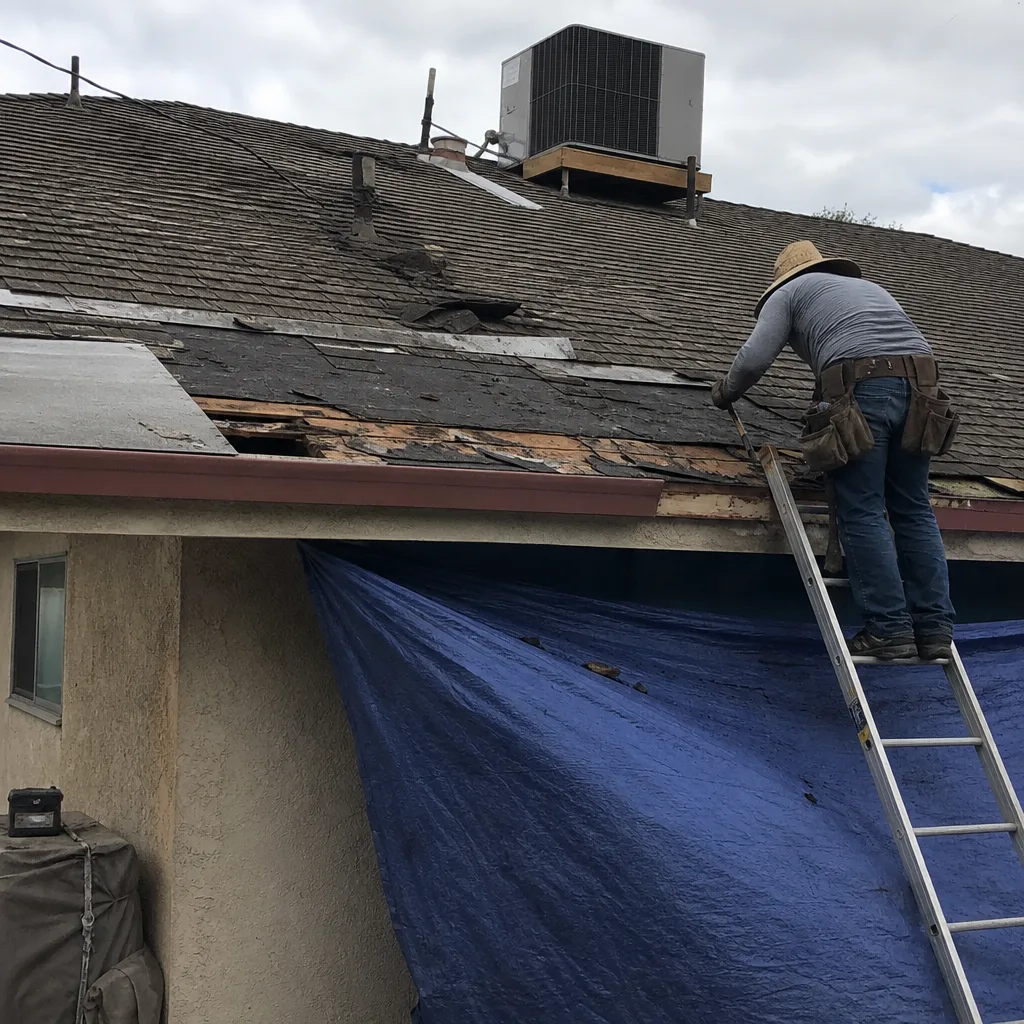 Before
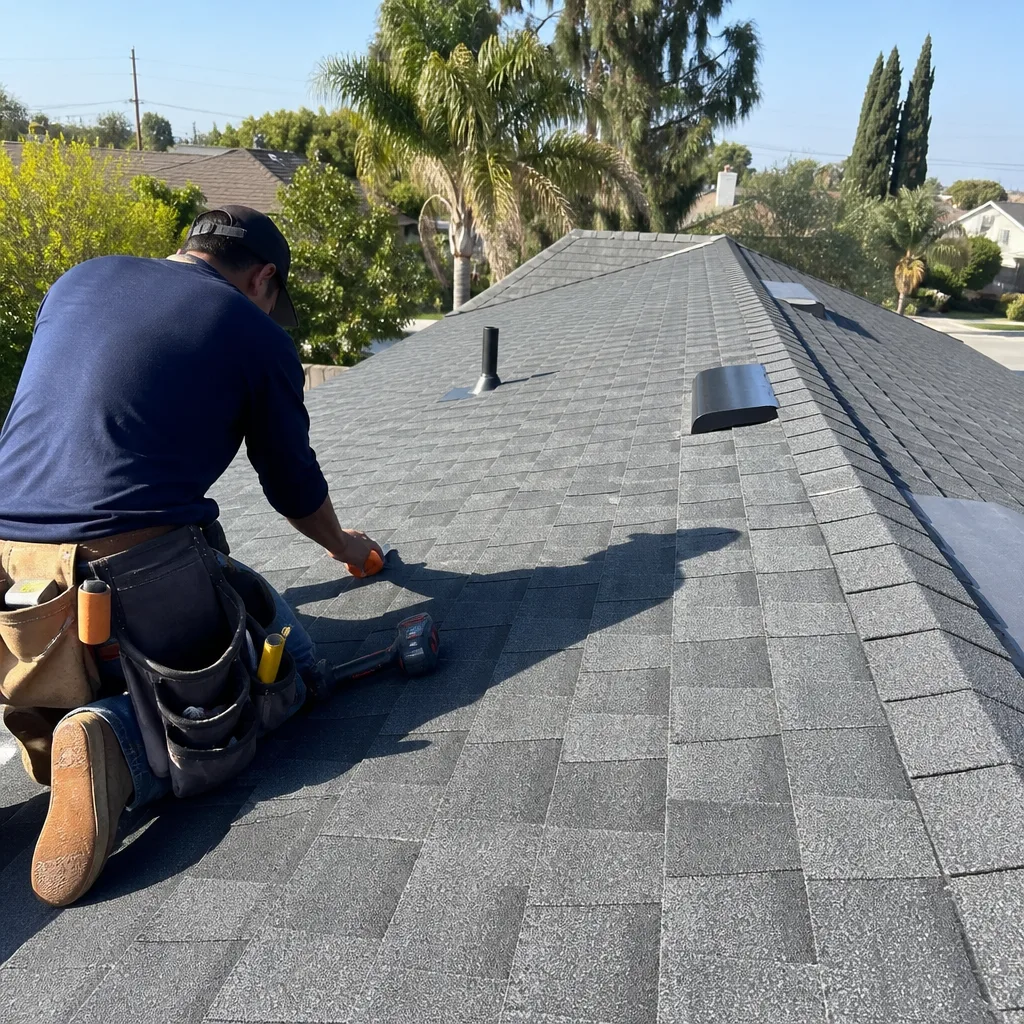 After
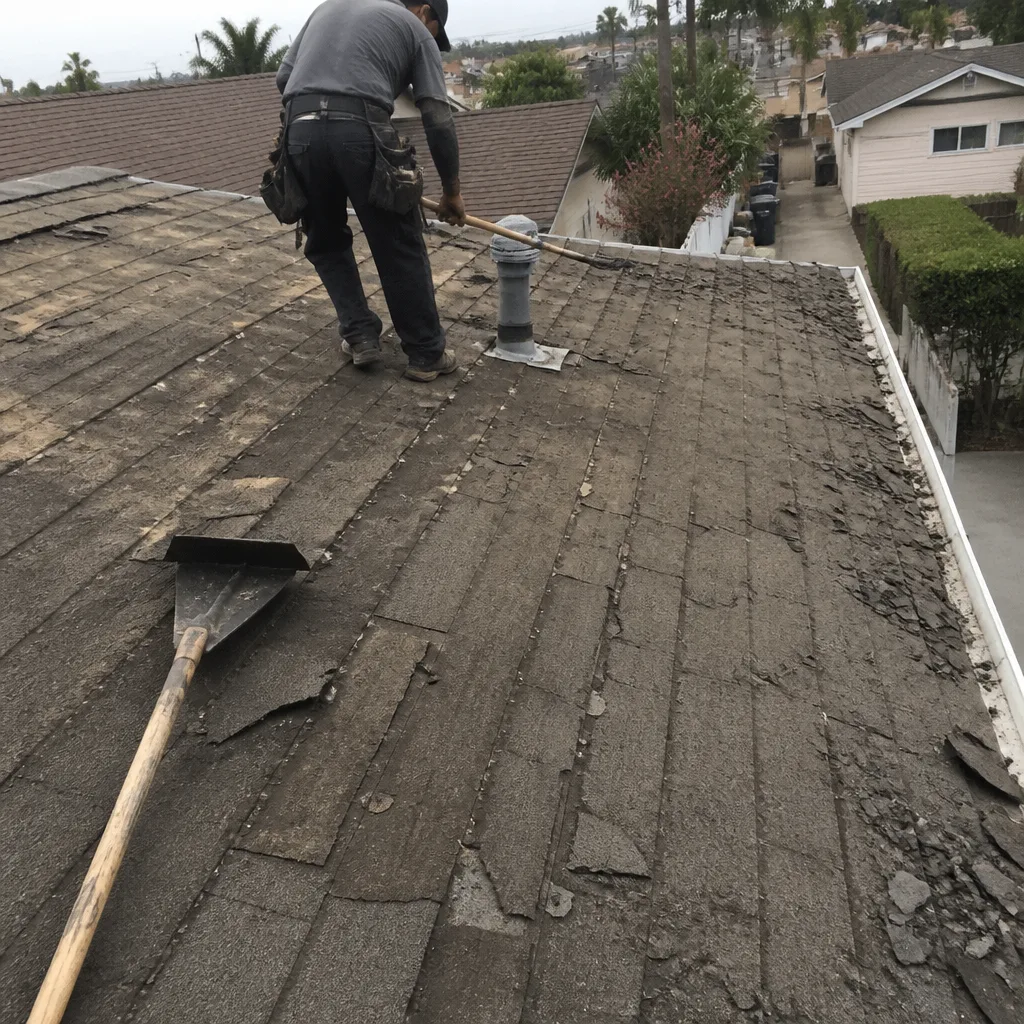 Before
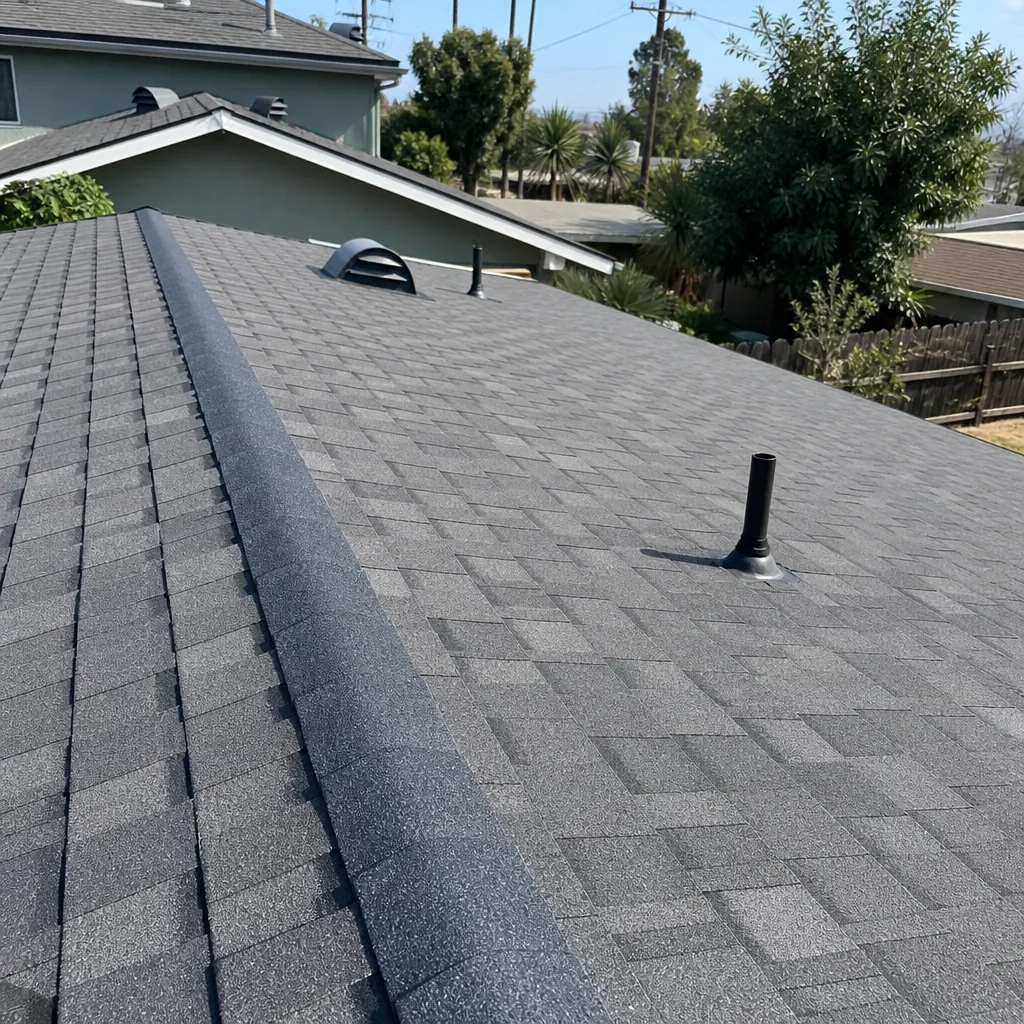 After
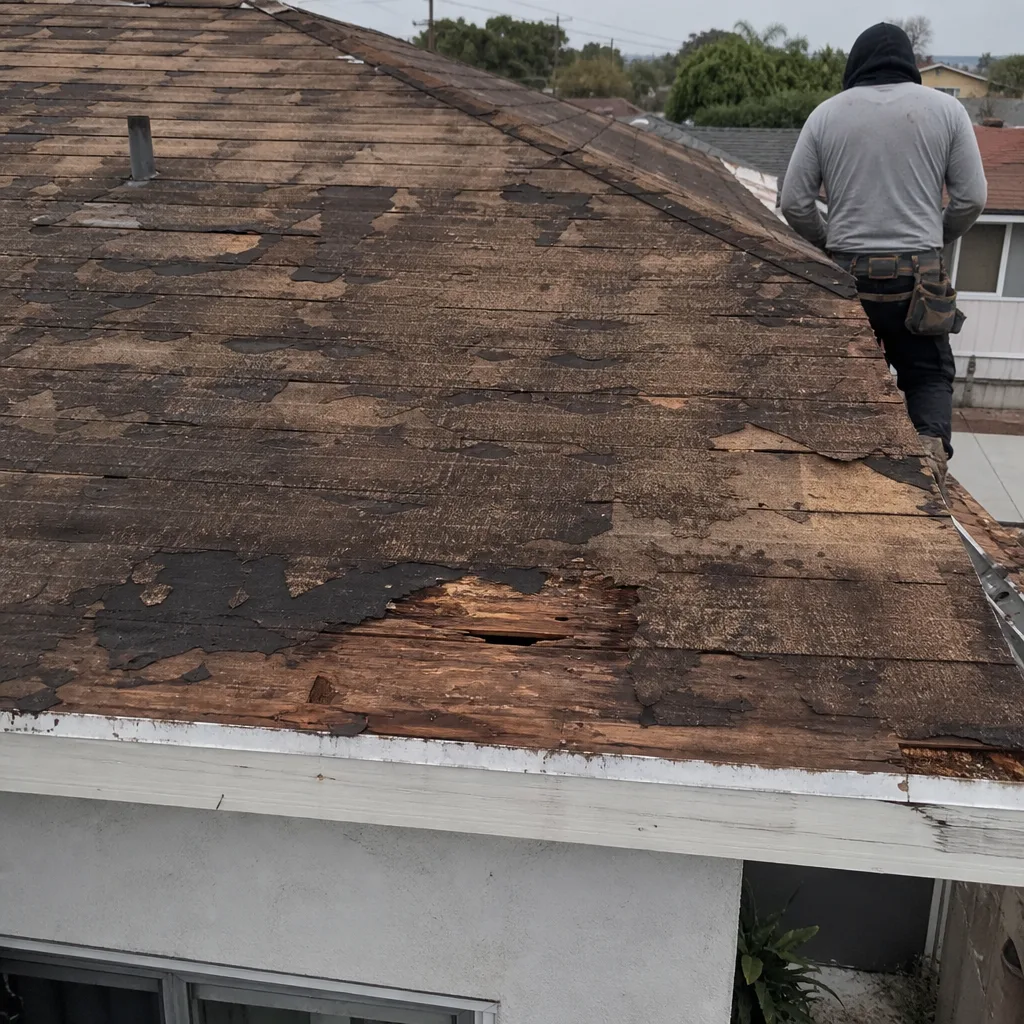 Before
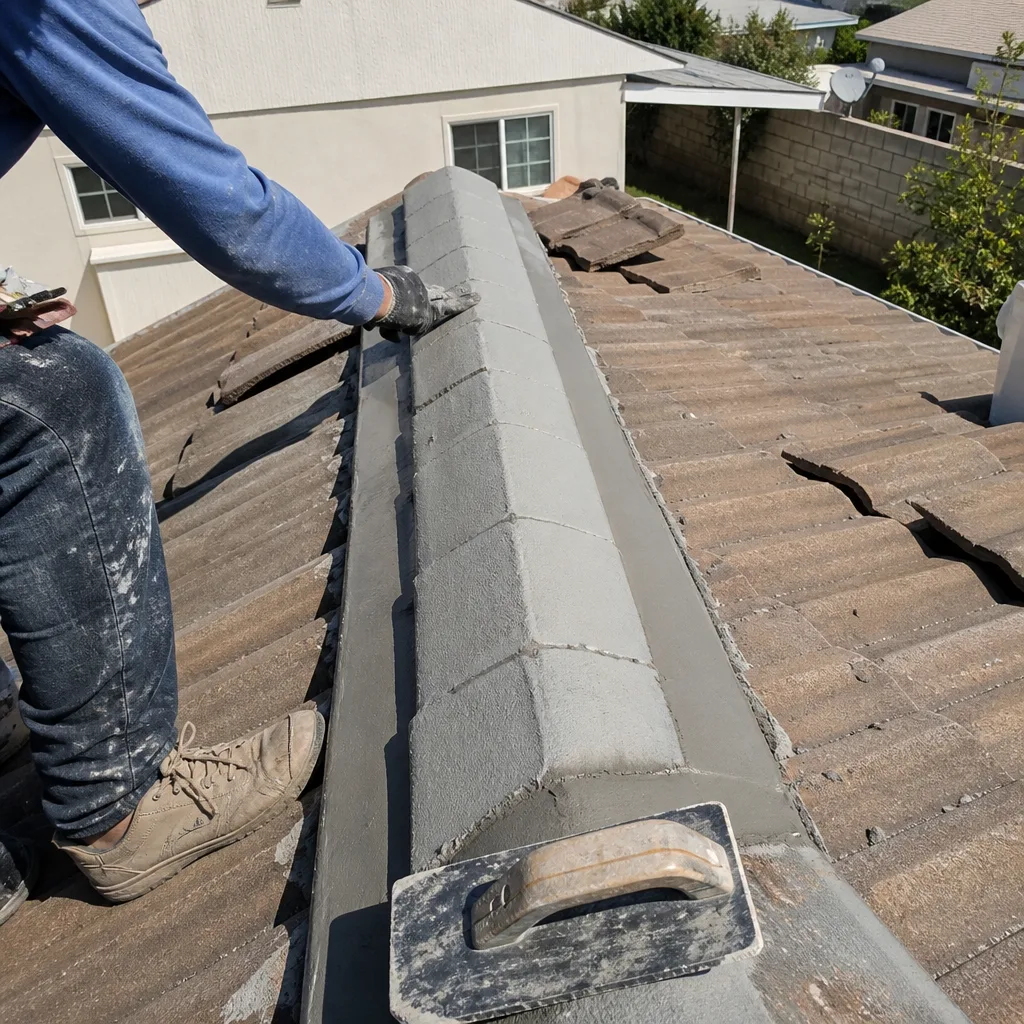 After