
Last updated October 30, 2026
 Metal roofing
 Architectural shingles
 Tile roofing
 GAF
 Owens Corning
 Flat & low-slope
Free roof inspection with deck photos before we talk money - GAF and Owens Corning certified installation
Roofing Warning Signs: A El Monte Homeowner’s Reference Guide
A ceiling stain is not a roofing problem. It’s a roofing problem that already progressed through the shingles, decking, insulation, and vapor barrier before anyone noticed. By the time water reaches your drywall, you’re not catching a leak early. You’re catching a leak that’s been working its way down for months. In El Monte, where summer sun bakes asphalt shingles to 140 degrees and winter’s Santa Ana winds strip granules, the warning signs show up long before the damage becomes visible inside your home. This guide teaches you to read your roof the way a roofer does, so you can act on the early signals instead of reacting to the late ones.
Styles & brands we work with
Quick Answer
The clearest roofing warning signs in El Monte are curled or lifting shingle edges, dark granule accumulation in gutters, rusted or missing flashing, and daylight visible from the attic. Most early-stage problems announce themselves in the attic and at the roofline, not on the ceiling. If you see dark streaks on the roof’s north slope, lifting shingles after a wind event, or granules collecting at downspout openings, schedule a professional inspection before water gets involved.
Table of Contents
- Your Attic Is the Best Early-Warning System You Never Check
- How to Tell Cosmetic Shingle Aging from Structural Failure
- Reading Granule Loss in Gutters and Downspouts
- Flashing Failures: The Leading Cause of El Monte Roof Leaks
- Low-Slope and Flat Roof Warnings: A Different Playbook
- Interior Warning Signs You Should Never Ignore
- Severity Triage: Monitor, Schedule, or Call Today
- Common Mistakes to Avoid
- When to Call a Professional
- Frequently Asked Questions
- The Bottom Line
Your Attic Is the Best Early-Warning System You Never Check
If you only learn one thing from this guide, make it this: the underside of your roof decking tells you more about your roof’s health than the shingles you can see from the street. In El Monte, where most homes were built between the 1950s and 1980s, attic access is often a small hatch in a hallway ceiling. Once you’re up there with a flashlight, you’re looking at the roof’s truth layer.
Here’s what to look for, in order of severity:
- Daylight through the decking. If you can see pinpoints of light where the plywood meets, you have gaps that water can exploit. This is a “call today” signal, not a “monitor it” signal.
- Dark stains on wood. These indicate past or active moisture. If the stain feels dry and brittle, the leak may have sealed itself temporarily. If it’s soft or damp, water is actively moving through the decking.
- Rust on nail heads. Roofing nails that protrude through the decking and show rust are condensing moisture. This means your attic ventilation is not moving air efficiently, and that trapped heat is aging your shingles from below.
- Sagging decking between rafters. This means the plywood has absorbed moisture and lost structural integrity. Replacement is usually the fix, not a patch.
We’ve inspected attics across El Monte from the foothill neighborhoods north of the 10 freeway down to the areas near the Rio Hondo, and the pattern is consistent: homes with good attic ventilation show dramatically less decking deterioration at the 20-year mark than homes where the attic holds heat and moisture. A roof that bakes from both sides ages twice as fast. The Roof Inspection in El Monte service we offer includes a full attic assessment, because the roof’s fastest failure mode is invisible from outside.
How to Tell Cosmetic Shingle Aging from Structural Failure
Asphalt shingles don’t fail all at once. They degrade in stages, and most of those stages are visible from a ladder or a pair of binoculars. The key is knowing which changes are cosmetic and which ones mean the shingle has stopped doing its job.
Cosmetic aging: what it looks like
- Uniform color fading. Sun exposure gradually lightens shingles. This looks bad but doesn’t mean the roof is failing. Asphalt shingles from brands like GAF and CertainTeed are engineered to fade gradually without losing their waterproofing capability.
- Minor granular shedding in year one. New roofs always shed excess granules during the first few months. Light amounts in gutters after installation are normal.
- Light blistering on the shingle face. Small raised bumps, especially on south-facing slopes, are common in El Monte’s high-heat summers. If the blisters haven’t popped, the shingle still sheds water.
Structural failure: what it looks like
- Curling at shingle corners and edges. A shingle that lifts at the edges is exposing its adhesive strip and the nail line beneath. Wind can get underneath, and rain can pool at the lifted edge. Once you see curling on more than a few shingles, the roof has entered its failure window.
- Missing tabs. If the bottom third of a shingle has torn away, the nail line is exposed. This is an active leak risk, not a cosmetic issue.
- Cracking through the shingle body. Horizontal cracks that run through the shingle mean the asphalt has lost its flexibility. This happens faster in El Monte because temperature swings between day and night are wider than in coastal cities like Long Beach.
- Bare spots where granules used to be. A shingle that has lost its granular surface down to the asphalt mat is absorbing sun and water directly. This is structural failure, not aging.
Photograph what you see. A smartphone photo from the same angle every six months gives you a baseline for comparison. In our experience, most El Monte homeowners who catch curling shingles early end up with a Roof Repair in El Monte job that’s measured in hundreds of dollars, not the five-figure tear-off they’d face two years later.
Reading Granule Loss in Gutters and Downspouts
Your gutters are the roof’s diagnostic report card. Every time it rains in El Monte, shingle granules slide off the roof, into the gutters, and collect at the downspout openings. The amount and timing of that granule accumulation tells you more about your roof’s remaining life than the shingle color does.
Here’s how to read it:
- Clean your gutters, then track what comes back. If you clean the gutters in June and find a half-inch of granules in the same spots by October, your shingles are shedding at an abnormal rate. Normal shedding after year one should be barely measurable between cleanings.
- Look at granule color against shingle color. If the granules in the gutter are a uniform gray-black, they’re likely from the shingle surface wearing evenly. If you see a mix of colors matching your shingle’s blend, the surface is eroding across the board. Even erosion means aging. Patchy erosion means specific shingles are failing faster than others.
- Check the downspout splash blocks. After a heavy rain, the water that runs off the roof and down the downspout should be mostly clear. If it runs dark or leaves a granular residue on concrete, your shingles are shedding enough material to affect water quality. That’s a late-stage warning sign.
El Monte’s position in the San Gabriel Valley means roofs here don’t get the constant marine-layer moisture that coastal roofs get, but they do get brief, intense downpours during winter storm cycles. Those storms are when granule migration is most visible. If you can hear granules hitting the gutter during a rain, you’re not imagining it. You’re hearing shingle life leaving the roof. Owens Corning and CertainTeed both publish expected granule loss curves for their product lines, and in our work across El Monte, we see roofs crossing the failure threshold most often between years 18 and 22, depending on exposure and ventilation.
Flashing Failures: The Leading Cause of El Monte Roof Leaks
Here’s a statistic most homeowners don’t hear: the majority of leaks we repair on El Monte homes are not shingle failures. They’re flashing failures. Flashing is the metal material installed wherever the roof plane meets something vertical: chimneys, vent pipes, skylights, walls, and valleys. It’s the junction points that fail first.
In El Monte, where older homes often have original galvanized steel flashing from the 1960s and 70s, rust-through is a common failure mode. Galvanized flashing has a lifespan of roughly 15 to 20 years in our climate. After that, the zinc coating breaks down and the steel corrodes.
Warning signs of flashing failure:
- Rust streaks running down from chimney or vent pipe bases. This means the flashing metal is actively corroding and water is carrying rust away with it.
- Lifted or separated flashing around skylights. Skylight flashing relies on a tight seal between the curb and the roofing material. If you can see daylight under the flashing edge, water gets in.
- Missing or displaced step flashing along walls. Step flashing is installed in pieces as the roof courses go up. If a piece shifts or falls out, the wall-roof junction becomes a direct water path.
- Valley flashing with visible holes or heavy rust scaling. Valley flashing channels more water than any other part of the roof. If it’s compromised, that water is going directly into the decking.
When we inspect a roof, we start with the flashing before we count missing shingles. It’s the fastest path to the truth about a roof’s condition. And because flashing repair is almost always a component-level fix, it’s exactly the kind of job where the Roof Repair in El Monte approach makes sense: fix the flashing, save the roof, move on.
Low-Slope and Flat Roof Warnings: A Different Playbook
El Monte has a significant stock of homes with low-slope or flat roof sections, particularly in the original post-war tract neighborhoods and on commercial-adjacent residential properties. These roofs play by completely different rules than pitched shingle roofs. The warning signs are different, and the failure modes are different.
On a flat or low-slope roof, standing water is the first priority. A well-installed flat roof should drain within 48 hours after rain. If water ponds in the same areas after every storm and sits for days, the membrane is being chemically aged in those spots. Most flat roof membranes, including modified bitumen systems, are rated for intermittent water exposure, not permanent saturation. Ponding water is a “schedule a repair” signal, not a “monitor it” signal.
Here’s what else to look for on El Monte flat roofs:
- Alligatoring on the membrane surface. The membrane develops a pattern of cracks that looks like alligator skin. This means the surface has lost its oils and UV resistance. If you can see alligatoring, the membrane is within a few years of failure.
- Blistering or bubbling. Trapped moisture between membrane layers expands in El Monte’s summer heat and creates raised bubbles. When a blister pops, the membrane is breached.
- Pulled-away flashing at parapet walls. Flat roofs typically terminate at a parapet wall, and the membrane runs up that wall and is secured with termination bar. If the membrane separates from the wall, water gets behind it and into the building envelope.
- Debris accumulation at drain scuppers. A clogged drain on a flat roof converts the entire roof into a temporary water retention basin. Scupper clogs are the most preventable cause of flat roof failure in El Monte.
Flat roof materials have shorter service lives than pitched shingle roofs, typically 15 to 20 years even with proper maintenance. Boral and Tamko both manufacture flat roofing membranes, and the material choice matters: a roof designed for Phoenix’s dry heat may not hold up the same way in El Monte’s winter rain pattern. The material has to match the climate, not just the slope.
Interior Warning Signs You Should Never Ignore
When water makes it to the interior of your El Monte home, the leak has already been active long enough to travel through multiple material layers. But interior signs still matter, because they tell you where the water is going and how urgent the response should be.
Here are the interior signs, ranked from least to most urgent:
- Peeling paint or wallpaper at ceiling edges. This indicates moisture has wicked along the wall-ceiling junction. Often associated with flashing failures at the roofline, not a mid-field shingle problem.
- Water stains on ceiling drywall. A brownish ring or stain, even if dry, means water sat there. If the ring is growing between rains, the leak is active. Mark the edges with a pencil and check back after the next storm to measure expansion.
- Musty odor in a specific room or hallway. Mold and mildew from trapped moisture have a distinct smell. If you can’t locate the source visually, it may be in wall cavities or under flooring.
- Visible dripping or wet drywall. Once you can see water moving through a ceiling, the decking above is saturated and likely needs repair or replacement. Call a roofer today, not next week.
One El Monte-specific note: homes near the Rio Hondo and San Gabriel River corridors tend to have higher ambient humidity than homes in the northern foothills. That means interior moisture issues in those neighborhoods can take longer to dry out once a leak is repaired. Faster response means less secondary damage.
Severity Triage: Monitor, Schedule, or Call Today
Not every warning sign demands immediate action. Some do. The skill is in knowing which is which. Here’s the triage system we use when we talk to El Monte homeowners about what they’re seeing.
Monitor it: check again in 3 to 6 months
- Uniform color fading without curling or cracking
- Light granule accumulation in gutters more than 2 years after installation
- Minor surface blistering that hasn’t popped
- Small, dry water stains that don’t grow between rains
Schedule a repair: call for an inspection within 2 to 4 weeks
- Curling shingle edges on fewer than 10% of the roof’s surface
- Rust streaks at flashing without visible gaps
- Ponding water on flat roof sections that drains in 3 to 5 days
- Daylight visible in attic at isolated points
- Alligatoring on low-slope membrane surfaces
Call today: active water entry or structural risk
- Missing shingle tabs after a wind event
- Water actively dripping into the home
- Daylight visible in attic across a section wider than a pencil
- Sagging or soft decking in the attic
- Visible separation between flashing and wall or chimney
This tiered approach means you don’t panic over cosmetic aging, but you also don’t ignore a flashing failure until it becomes a ceiling collapse. The right fix for your roof is scale-appropriate. A roof with isolated flashing damage gets a flashing repair. A roof with widespread shingle failure gets a Roof Replacement in El Monte. You deserve a contractor who can tell you which one you actually need.
Common Mistakes to Avoid
- Waiting for the leak before calling. By the time water is inside, the repair cost has multiplied. The attic and gutter signs show up 12 to 18 months earlier. Read them.
- Ignoring the attic because it’s unpleasant. The attic is where the truth lives. An unpleasant 15 minutes with a flashlight beats a $3,000 decking repair.
- Assuming a new roof means no maintenance. Even a GAF or CertainTeed roof installed yesterday can develop a flashing issue next year. New roofs need inspections too, just less urgently.
- Treating granules in gutters as a gutter cleaning problem. The granules aren’t the problem. The shingles losing them are. Clean the gutters, but diagnose the roof.
- Patching over flashing failures instead of replacing the flashing. Roof cement and sealant are temporary measures. They fail within one to two El Monte summers. Replace the flashing.
- Ignoring ponding on flat roofs because it eventually evaporates. “Eventually evaporates” is exactly how membranes fail early. Drainage is a structural requirement, not a cosmetic preference.
- Choosing a replacement roof based on price per square foot alone. Material choice matters as much as material cost. Owens Corning, GAF, CertainTeed, Boral, Atlas, IKO, and Tamko all make different products for different conditions. The right one for your El Monte roof depends on slope, exposure, and ventilation, not just budget.
When to Call a Professional
Call a roofer when you see any of the “schedule a repair” or “call today” signals listed above. Call when a storm passes through and you’re not sure whether the damage is cosmetic or structural. Call when you’ve lived in the home for five years or more and have never had the attic decking inspected. Call when you’re selling and want to know what the buyer’s inspector will find before they find it.
Vista Roof Repair offers free estimates in El Monte. We inspect, repair, and replace roofing systems using seven nationally recognized brands, including GAF, CertainTeed, Owens Corning, and Boral. You get a clear assessment and material options across premium and mid-range lines, not a single-vendor pitch. Call (866) 253-8145 to schedule a Roof Inspection in El Monte.
Frequently Asked Questions
After a significant wind or rain event, check for missing shingle tabs on the ground around your property, look for lifted shingle edges from the street, and check the attic for new water stains or daylight. El Monte’s winter storms typically cause shingle displacement and flashing separation rather than full roof failure, and catching those issues within a few weeks prevents water entry during the next storm cycle.
Roof repair costs in El Monte vary by scope, but a flashing repair or isolated shingle replacement typically runs in the low hundreds of dollars, while decking replacement or valley rebuilding costs more. Since we never guarantee pricing without seeing the roof, your best path to an accurate number is a free estimate. Call (866) 253-8145 and we’ll assess what’s actually needed.
Yes, for the attic and ground-level observations described in this guide. We do not recommend climbing onto the roof surface itself. Steep pitches, brittle tiles, and loose granules create fall hazards that aren’t worth the risk. Use binoculars from the street and a flashlight in the attic, and let a trained roofer handle anything that requires boots on the roof deck.
Every two to three years is a reasonable interval for most El Monte roofs, with an additional check after any major wind or hail event. Older roofs past the 15-year mark benefit from annual inspections, since the failure rate accelerates in the final third of a roof’s service life.
Granule loss means the shingle’s UV protection is eroding, and the asphalt below it is being exposed to direct sun. Once enough granule mass is lost, the shingle becomes brittle and waterproofing fails. In El Monte, where summer rooftop temperatures are extreme, granule loss is a leading indicator that a roof is entering its final 3 to 5 years of service life, even if it hasn’t leaked yet.
It depends on the cause of the damage and your specific policy. Sudden events like storm damage are typically covered, while gradual aging and deferred maintenance are not. We recommend documenting the condition of your roof with photos and keeping inspection records, since insurers in Southern California increasingly scrutinize roof condition before writing or renewing policies.
The Bottom Line
Roofs don’t fail suddenly. They telegraph failure for months in the attic, at the roofline, and in the gutters before water ever touches your ceiling. The homeowner who learns to read those signals can fix a flashing issue for a few hundred dollars instead of replacing a water-damaged ceiling and decking for thousands. El Monte’s climate, with its hot dry summers and concentrated winter rains, accelerates certain failure modes, but that same predictability means you can stay ahead of the timeline. Inspect your attic. Read your gutters. Photograph what you see. And when the signs point to action, get a professional assessment from a roofer who works with GAF, CertainTeed, Owens Corning, and Boral materials and can tell you which of the seven brands we carry actually fits your roof’s conditions. That’s how you protect a El Monte home, not by reacting to leaks, but by reading the roof before the leak arrives.
Written by the team at Vista Roof Repair, serving El Monte since 2017.
See the difference
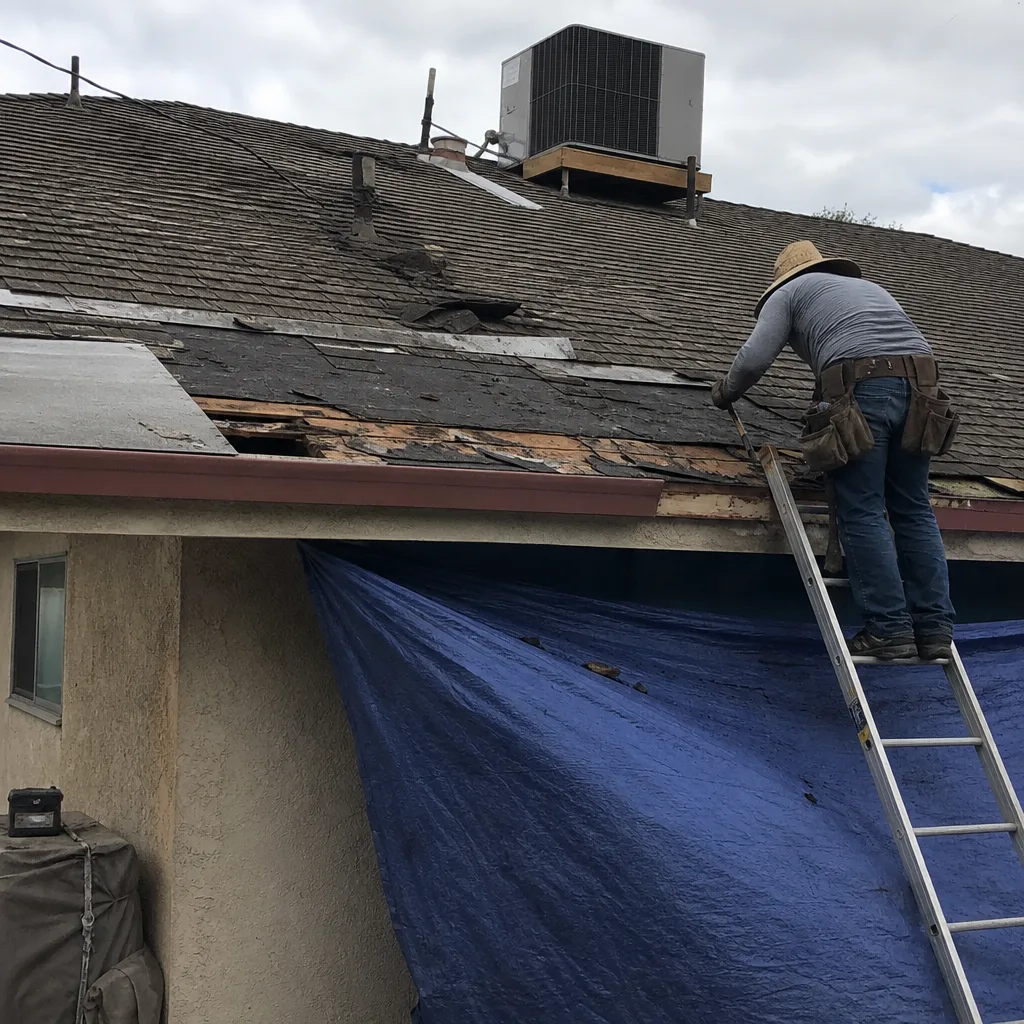 Before
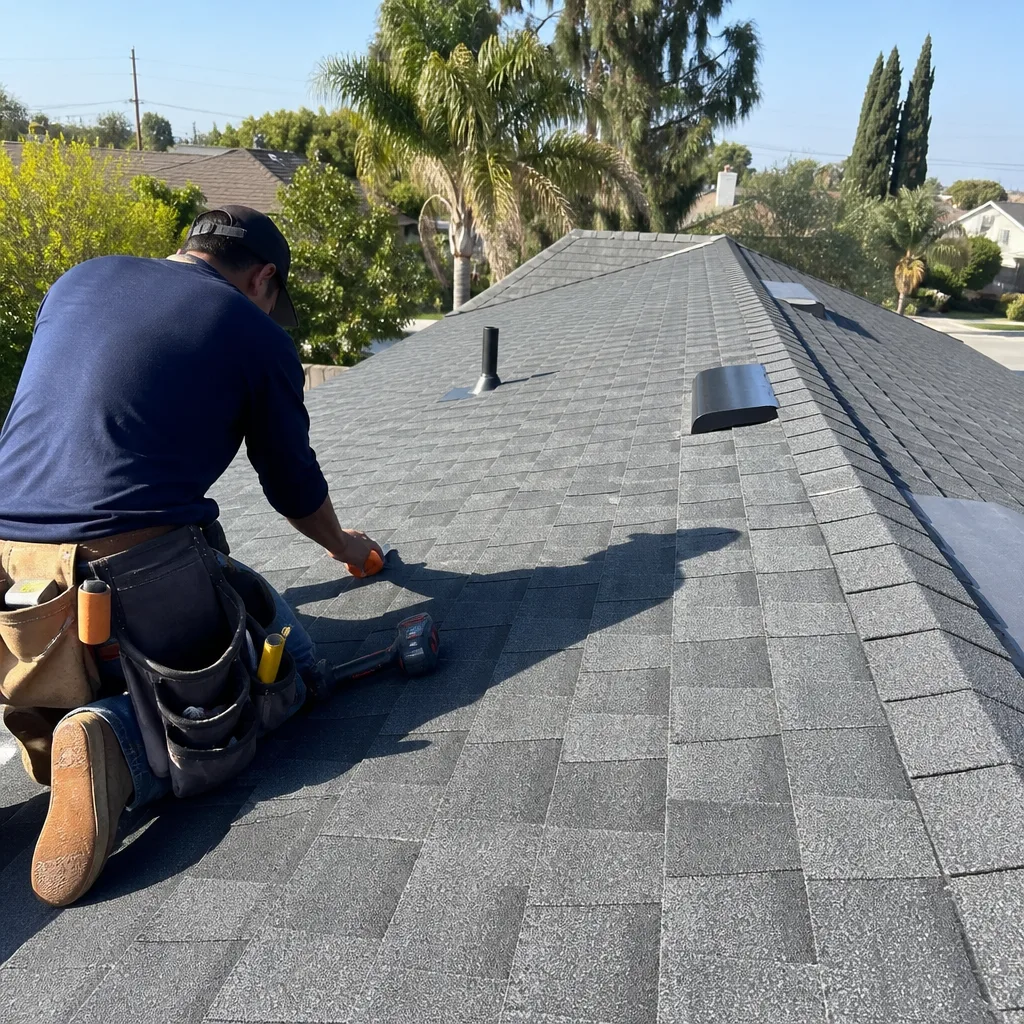 After
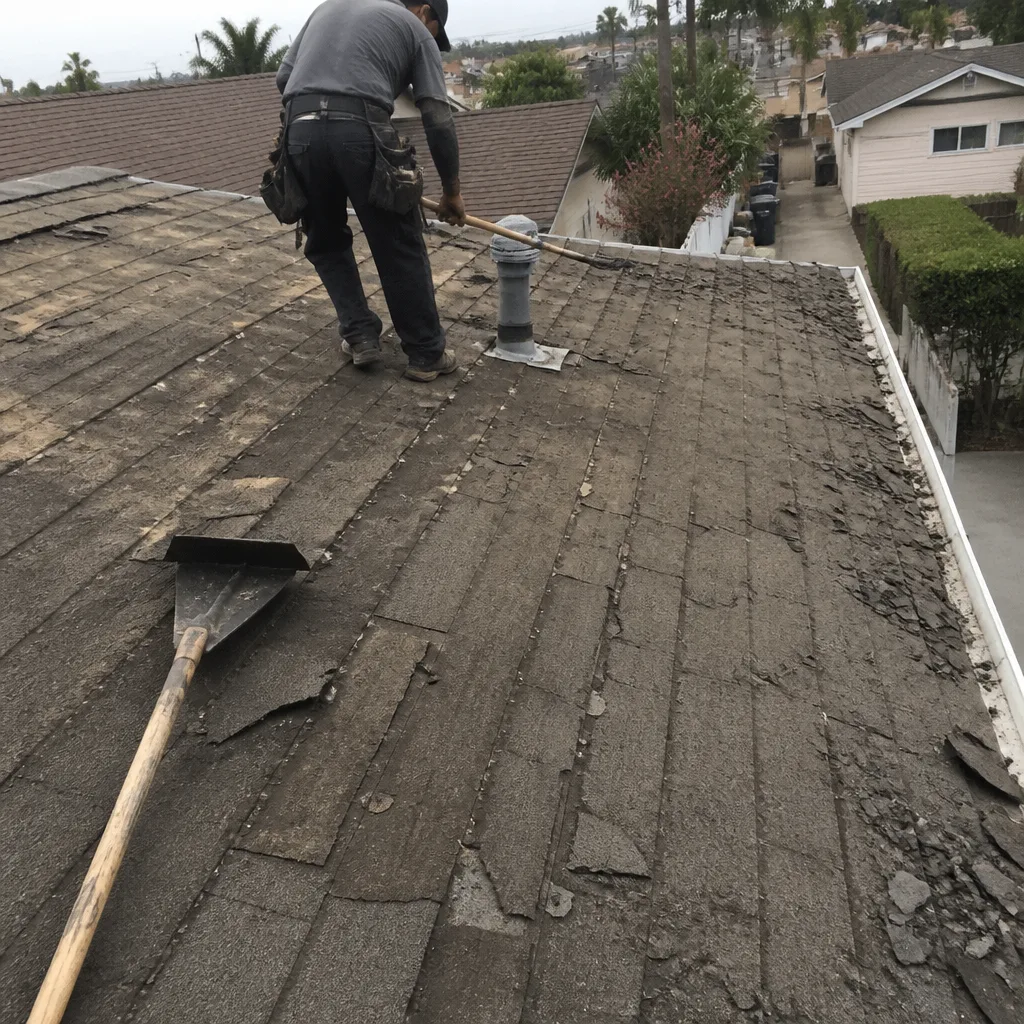 Before
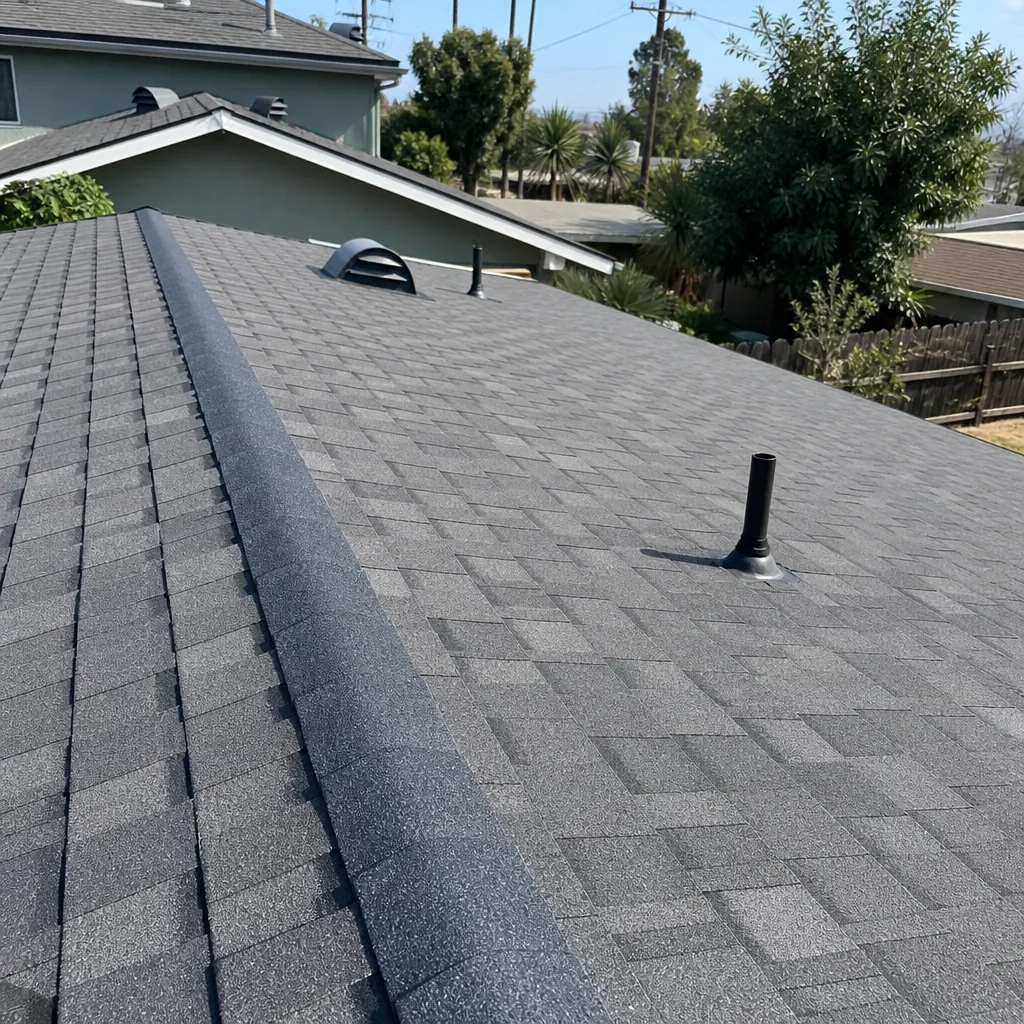 After
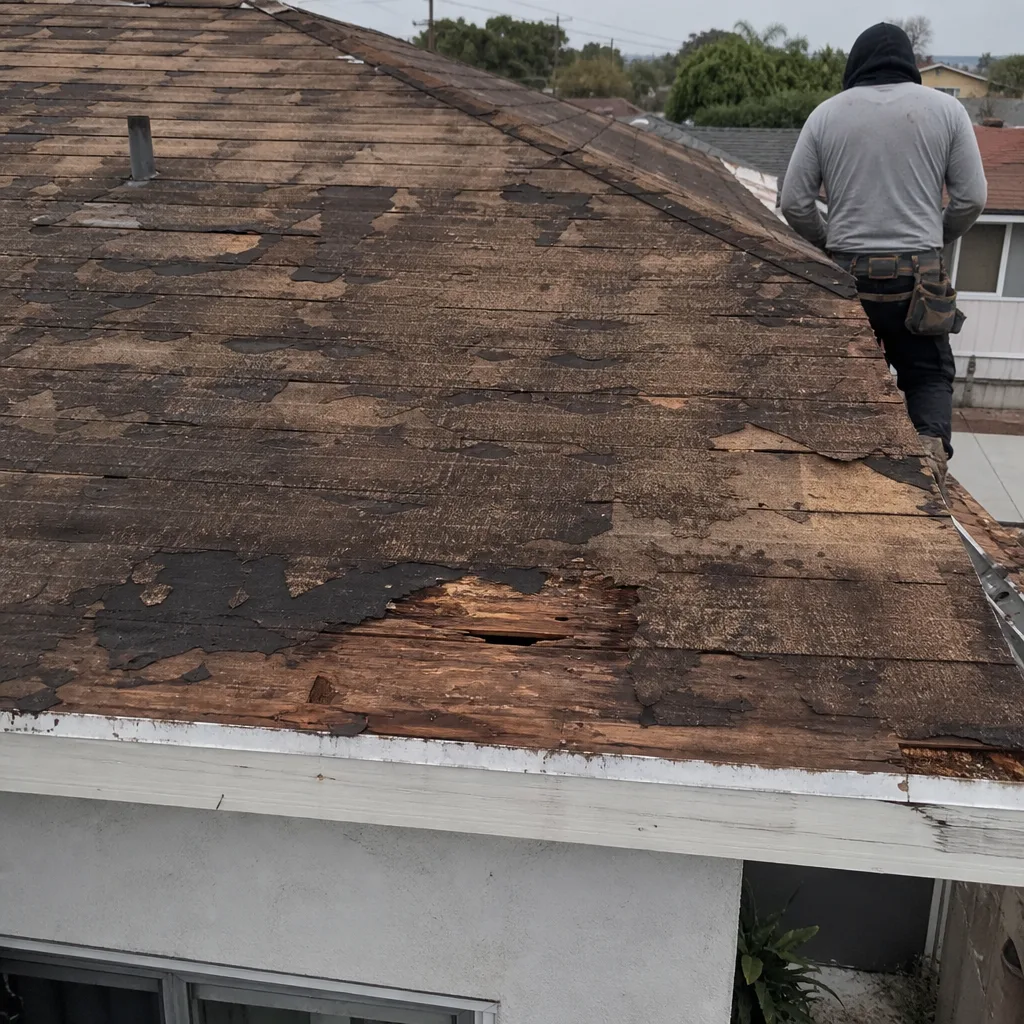 Before
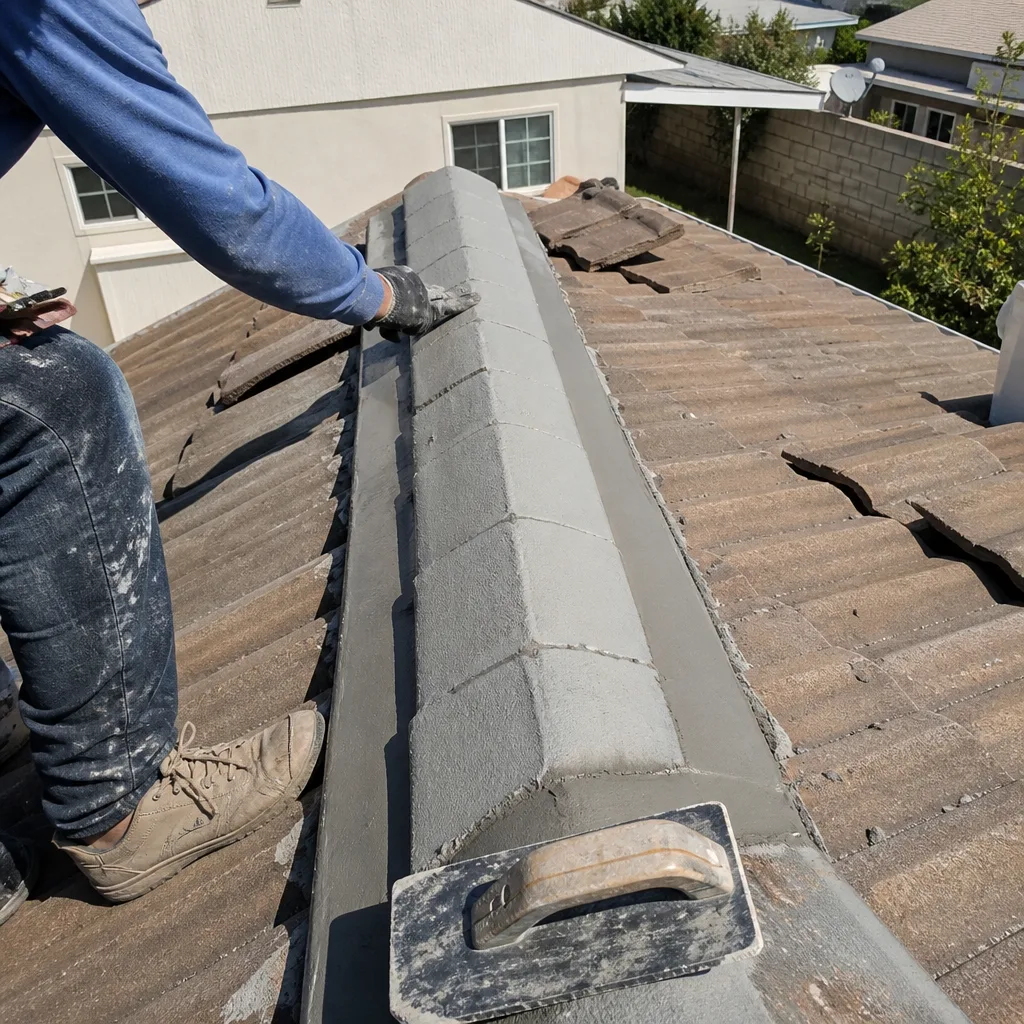 After