
Last updated October 30, 2026
 Architectural shingles
 Metal roofing
 Tile roofing
 GAF
 Owens Corning
 Flat & low-slope
Free roof inspection with deck photos before we talk money - GAF and Owens Corning certified installation
Roof Repair Maintenance Checklist for El Monte Homeowners
The most common roof repair call we get in the San Gabriel Valley isn’t storm damage. It’s deferred maintenance, a small crack that became a rotted deck, a lifted shingle that became a ceiling stain, that a 20-minute annual inspection would have caught three years earlier. Roofs in El Monte don’t fail dramatically. They fail quietly, over time, in ways that are predictable if you know what to look for. This guide walks you through a maintenance checklist built for El Monte’s actual climate: dry summers, Santa Ana winds, coastal haze, and a UV load that ages roofing materials faster than most homeowners expect.
Quick Answer
A roof maintenance checklist for El Monte homeowners means inspecting twice a year, once in early spring (after winter rain) and once in late fall (before Santa Ana season), with the focus on UV-baked shingles, wind-lifted edges, clogged valleys, and the early signs of dry rot in soffits and fascia. The most important tasks are clearing debris from valleys and drains, checking flashing seals around vents and chimneys, and documenting any shingle granule loss with photos. Most maintenance costs under $200 a year; most deferred repairs cost $1,200 to $4,800.
Styles & brands we work with
Table of Contents
- The El Monte Threat Calendar: What Actually Damages Roofs Here
- The Six Components You Can Safely Inspect Yourself
- The Four Things to Leave to a Roofer with a Ladder
- Seasonal Maintenance: What to Do and When
- Distinguishing Normal UV Weathering from Structural Deterioration
- How to Document Roof Condition for Insurance Claims
- Maintenance That Extends Roof Life vs. Cosmetic Fixes That Mask Problems
- Common Mistakes to Avoid
The El Monte Threat Calendar: What Actually Damages Roofs Here
Forget the generic four-season maintenance advice you’ll find on national roofing websites. El Monte doesn’t have freeze-thaw cycles, ice dams, or snow load. What we do have is a specific pattern of threats that repeats every year, and a maintenance calendar that works in Chicago will miss half of what matters in the San Gabriel Valley. In our experience working on roofs across El Monte, from the older housing stock near Valley Boulevard to the hillside homes in the northern part of the city, the damage calendar follows five distinct periods.
January through March is the rain window. El Monte averages about 17 inches of rain a year, nearly all of it falling between November and March. This is when small leaks show up, and they always show up in the same places: around vent flashings, pipe boots, and chimney transitions. The problem is that by the time you see a ceiling stain, water has already been working through the decking for weeks or months. This is why we recommend an inspection in March, after the rain stops, when the moisture is still visible and the damage hasn’t dried into hidden rot.
April through June is the dry-rot season. This is the most overlooked maintenance window in El Monte. When winter moisture sits trapped under shingles or behind flashing, and spring temperatures climb into the 80s, the wood decking stays damp while the surface bakes. That combination, moisture plus heat plus oxygen, is exactly what dry rot fungus needs to spread. By June, rot that started as a coin-sized spot in February can span multiple rafters. We’ve seen entire eave sections in El Monte neighborhoods fail during summer heat waves, not from age, but from rot that had all spring to grow.
July through September is the UV stress period. El Monte gets an average of 280+ sunny days a year. That constant solar load breaks down asphalt shingle granules, shrinks the asphalt mat, and causes shingles to curl at the corners. Air conditioning runs hard during these months, which means the attic is hot, which means the underside of the roof deck is cooking. Roof surface temperatures in July routinely hit 150 degrees Fahrenheit. This is normal for the climate, but it’s also why a 20-year shingle often lasts 14 to 16 years in this city.
October through December brings Santa Ana wind season. These offshore winds are dry, gusty, and can reach 40 to 60 mph in El Monte. They don’t tear roofs off, but they do find any shingle that’s already loose, any flashing that’s lost its seal, any ridge cap that’s started to lift. We get more calls in November about missing shingles than in any other month. The wind doesn’t cause the damage; it reveals the damage that UV radiation and age already created.
Knowing this calendar means you can time your inspections and maintenance to catch problems at the moment they become visible, before they become expensive. The roof on a house in El Monte doesn’t ask for much. Twice a year, about 20 minutes each time, at the right times of year.
The Six Components You Can Safely Inspect Yourself
You don’t need to climb onto your roof to catch most problems. Six areas are visible from the ground or from a window, and checking them regularly will catch 80 percent of the issues that lead to major repairs. We’ll tell you what your roof actually needs, and most of the time, what it needs first is a pair of eyes and a camera.
- Shingle condition from the street. Stand across the street and look at your roof’s slope. You’re looking for shingles that sit flat versus ones that curl upward at the corners, missing tabs, or patches that look darker or lighter than the surrounding area. Curling shingles on a sunny El Monte afternoon are normal for a roof past 15 years; what matters is how many and where. One or two curled shingles near the eaves is maintenance. Curling across an entire slope is a replacement signal.
- Granule accumulation in gutters or at downspout bases. Asphalt shingles shed granules constantly as they age. A few granules washing out after rain is normal. A visible pile of granules at the base of your downspouts, or a consistent color change in the gutter line, means the shingles are losing their UV protection at an accelerating rate. In El Monte’s sun, a roof that’s shed most of its granules is a roof that’s cooking.
- Valley and drainage paths. El Monte has plenty of mature trees, and leaves, twigs, and debris collect in roof valleys and behind chimneys. Debris holds moisture against the shingles and blocks water flow, forcing water sideways under shingle courses. Check visible valleys from the ground for accumulated debris, especially after the sycamore and oak leaf drop in late fall.
- Fascia and soffit condition. Look at the horizontal boards along your roofline. Stains, peeling paint, or soft spots on fascia boards almost always indicate water escaping from the roof edge or failing drip edge. In El Monte’s older homes, particularly those built before 1980, fascia damage is often the first visible sign of a roof leak that hasn’t reached the interior yet.
- Flashing visibility at penetrations. From the ground or an upper window, look at where pipes, vents, and chimneys exit the roof. You’re checking that the metal flashing is still sitting flat against the roof surface and that the rubber boot around plumbing pipes hasn’t cracked or shrunk back. Cracked pipe boots are one of the most common leak sources we repair, and they’re visible to anyone who takes 30 seconds to look.
- Interior ceiling and attic stains. This is inspection from the inside. Check ceilings under the roof for water stains, especially in the corners of rooms and around ceiling fixtures. In the attic, if you have access, look for daylight coming through the decking, dark staining on rafters, or crumbling wood. Dark stains that are dry and old are one thing; stains that are active, growing, or soft to the touch are an active leak.
None of these six checks requires a ladder, and all of them together take about 20 minutes. Do them twice a year, in March and October, and photograph anything that looks different from the last check. The goal isn’t to diagnose every problem; it’s to catch change early enough that a roof repair in El Monte costs $400 instead of $4,000.
The Four Things to Leave to a Roofer with a Ladder
Some issues require boots on the shingles and a trained eye. Not because homeowners can’t understand them, but because identifying them accurately requires being on the roof surface, and walking on a roof without proper technique causes its own damage. A full roof inspection in El Monte will catch all four of these. Here’s what we look for that you can’t safely assess from the ground.
- Hidden decking rot under intact shingles. Dry rot doesn’t announce itself. The shingles can look completely normal from the street while the plywood or skip sheathing underneath has turned to crumbly brown sponge. A roofer probes the deck by feel under the shingles and by walking the slope, feeling for soft spots that give under weight. This is the damage that turns a $900 repair into a $9,000 replacement, and it develops silently in El Monte’s warm, damp spring conditions.
- Flashing integrity at sidewalls and chimneys. Flashing failures at the junction between roof and vertical wall or chimney are subtle. The metal may look intact but the sealant has failed, or the step flashing has pulled away from the wall by a quarter inch, which is enough to let water in during wind-driven rain. Repairing these properly requires lifting shingles, removing and replacing the flashing, and resealing. It’s not a caulk job, and it’s not DIY.
- Compromised roof-to-wall transitions on flat or low-slope sections. Many El Monte homes, particularly those built in the 1950s and 1960s, have low-slope or flat sections over additions, porches, or carports. These sections often use modified bitumen or torch-down membranes rather than shingles, and they fail at seams and wall transitions in ways that aren’t visible from the ground. Standing water after rain, even for 48 hours, accelerates membrane breakdown. A roofer can identify ponding areas and check seams by feel.
- Attic ventilation adequacy. Poor attic ventilation is a slow killer of roofs in El Monte. When daytime attic temperatures climb and there’s not enough intake and exhaust airflow, the heat accelerates shingle deterioration from below. A roofer checks soffit venting, gable vents, and ridge or static exhaust, then calculates whether the ventilation is balanced for the attic’s square footage. The fix is usually straightforward, but it requires being in the attic and understanding airflow patterns.
Walking a roof safely is a skill. We use fall protection equipment and know where the deck is solid and where it isn’t. If any of the four issues above sounds like something you’ve been wondering about, or if you’ve never had a professional inspection, a standalone inspection from Vista Roof Repair will tell you exactly what your roof needs, no replacement pitch included.
Seasonal Maintenance: What to Do and When
This is the maintenance calendar that actually applies to El Monte’s climate. It’s built around the two inspection windows, early spring and late fall, with light tasks in between. Print it, stick it in the garage, and run through it twice a year.
March: The Post-Rain Inspection
- Check every ceiling and attic corner for new water stains. Compare against photos from October to identify what’s new.
- Clear valleys, scuppers, and downspout bases of any debris that washed in during winter storms.
- Look for lifted or missing shingles along the eaves, where wind-driven rain hits hardest.
- Examine fascia boards for soft spots or peeling paint that indicate winter moisture penetration.
- Check pipe boots and vent flashing for cracks that formed during winter temperature swings.
April – May: The Dry-Rot Watch
- Walk the perimeter and look for fascia or soffit areas that seem darker, softer, or swollen from moisture.
- Check for termites in any wood that’s touching the roofline; rot and termite damage often co-occur in El Monte.
- Ensure downspouts are directing water at least three feet away from the foundation, so runoff isn’t wicking up into wall plates and roof framing.
June – August: The UV Check
- Take a current set of roof photos from the same vantage point you used in October. Compare granule loss, color change, and curl progression.
- Check attic temperature on a hot afternoon. If it’s over 130 degrees Fahrenheit and your ventilation is passive only, consider adding an exhaust vent.
- Look for cracked caulk or sealant around skylights and chimney caps; UV radiation breaks down sealant in a single El Monte summer.
October: The Pre-Santa Ana Inspection
- Clear all debris from valleys and behind chimneys before the leaves have a chance to trap water.
- Inspect every shingle edge visible from the ground for lifting or curling. Santa Ana winds find loose shingles fast.
- Verify that flashing at sidewalls and chimneys is still lying flat. Seal any gaps with roofing cement, not silicone caulk.
- Check gutters are securely fastened. A loose gutter in a 50 mph gust becomes a roof edge lever.
- Photograph everything. This is your pre-wind-season baseline.
December – February: The Storm Response Window
- After any storm with wind gusts over 40 mph, do a quick ground-level check for missing shingles.
- After any rain over one inch in 24 hours, check ceilings and attic corners within 48 hours for moisture.
- If you see any new stain or missing shingle, call for a repair estimate before the next storm. Small leaks in El Monte rarely stay small through a full winter.
This is the full annual cycle. It’s about 40 minutes of total effort spread across the year, and it is the single most effective thing you can do to extend the life of an asphalt shingle roof in this climate.
Distinguishing Normal UV Weathering from Structural Deterioration
This is the question we hear most often from El Monte homeowners: “Is my roof just aging, or is it failing?” The answer matters because it determines whether you plan for maintenance over the next few years or for a roof replacement in El Monte sooner rather than later. Here’s how to tell the difference.
Granule loss. Normal: a thin, even layer of granules in the gutter after rain, and a slight lightening of shingle color over five to seven years. Accelerated: bare spots where the asphalt mat is visible, the roof looks patchy with dark and light areas, or you can see piles of granules at downspout bases. If the granules are gone, the UV protection is gone, and the shingle is failing even if it hasn’t cracked yet.
Shingle curling. Normal: slight lifting at the corners of a few shingles on the sun-exposed southern and western slopes after a decade. Accelerated: pronounced “clawing” (edges lifting while the center stays stuck), curling across an entire slope, or shingles that are brittle enough to crack when touched. This is the classic El Monte failure pattern: the shingles didn’t wear out, they cooked through.
Flashing condition. Normal: sealant around flashing that’s dulled, slightly cracked, but still bonded to the metal and shingle surface. Accelerated: flashing that’s pulled up, rusted through, or flashing sealant that’s peeled away leaving a visible gap. If you can see daylight between flashing and shingle from the ground, water is getting in.
Decking condition. Normal: a roof deck that’s intact and dry, even if it looks old. Discoloration from age is fine. Accelerated: decking that sags between rafters, is soft under foot, or shows dark water staining that stays wet for days after rain. Sagging decking is a structural problem, not a shingle problem, and it always means replacement of the affected section.
Roof age in El Monte context. Here’s the honest truth about what we see. An asphalt shingle roof in El Monte, with proper ventilation and normal maintenance, typically lasts 18 to 22 years. A tile roof from Boral or similar manufacturers lasts 40 to 60 years but requires underlayment replacement around year 25 to 30. If your shingle roof is past year 15, every inspection should be viewed as a replacement-planning exercise, not just a maintenance check. The goal is to replace on your timeline, not the roof’s.
How to Document Roof Condition for Insurance Claims
Documentation matters most when there’s a claim, and claims are where good photography pays off. We’ve worked with El Monte homeowners on insurance claims for wind damage, tree impacts, and rain intrusion, and the difference between a claim that settles quickly and one that drags out is almost always the quality of the homeowner’s documentation. Here’s how to photograph your roof like a claims adjuster would.
Step 1: Establish a baseline. Take a full set of roof photos twice a year, every year, from the same three vantage points: directly across the street, from the front yard’s left corner, and from the front yard’s right corner. Store them in a folder with the date. These baseline photos prove when damage happened, because the insurance company will always ask “was this pre-existing?”
Step 2: Photograph the details. After a storm or when you spot a concern, take close-up photos of the specific area. Include a reference object in the frame, like a roof vent or dormer, so the location is identifiable. Photograph from multiple angles: straight on, from below looking up: and from above if you have an upper window. The claims adjuster needs to see the defect, not your thumb.
Step 3: Document the consequences. Photograph interior stains, wet drywall, peeling paint, or framing damage. Measure the stain with a tape measure in the photo. Date-stamp every photo. Write a short note describing when you first noticed the problem and what the weather was like. Memory fades; notes survive.
Step 4: Keep a repair log. Record every repair you make, big or small, with date, description, and photos before and after. This demonstrates maintenance, which is relevant when insurance companies assess negligence. A roof that was properly maintained and documented is much easier to claim for. A roof with no maintenance record invites a denial for neglect.
This documentation habit takes 20 minutes twice a year and will save you thousands of dollars if you ever file a claim. It also helps any roofer you call, because we can see exactly what the roof looked like before the current problem.
Maintenance That Extends Roof Life vs. Cosmetic Fixes That Mask Problems
There’s a difference between maintaining a roof and decorating a problem. We see both, and the distinction matters because one saves you money and the other delays a repair until it’s more expensive. Here’s the honest breakdown.
Real maintenance: clearing debris. Removing leaves and branches from valleys and drains prevents water from being trapped against shingles. This is the single highest-return maintenance task on any El Monte roof. Water that flows is water that drains; water that pools is water that penetrates.
Real maintenance: sealing flashing gaps. Applying roofing cement to a flashing gap that’s still structurally sound extends the life of that seal by years. It’s a legitimate repair that addresses an active leak path. But this only works when the flashing is intact; if the metal is rusted or lifted, no amount of sealant fixes it.
Real maintenance: replacing individual damaged shingles. A torn or missing shingle can be replaced in minutes, and doing so prevents the exposure of the decking below. This is maintenance at its most effective: $15 in materials preventing $500 in decking repair. The key is using a shingle that matches the existing roof closely enough not to create a water-channeling seam.
Cosmetic masking: painting over stains. If you paint over a ceiling stain without fixing the leak, the leak is still there, now hidden behind paint. The stain will return, and the damage will continue to grow. Paint is not a repair; it’s a delay device, and a poor one.
Cosmetic masking: coating entire roofs without addressing substrate. Elastomeric roof coatings are sometimes marketed as roof restorations. They can extend a flat roof’s life in the right circumstances. But coating over a roof with wet decking, active rot, or failed seams seals the problem inside, where it worsens unseen. A coating is only as good as the substrate it covers.
Cosmetic masking: adding more caulk to an already-caulked joint. Repeated caulk applications build up a ridge that can actually channel water sideways under adjacent shingles. If a joint leaks after one caulk application, the problem isn’t the caulk, it’s the joint, and the joint needs proper flashing repair.
We’d rather tell a homeowner their roof needs a $400 repair than sell a $22,000 replacement. But we’d also rather tell them the truth: that some repairs are temporary and some fixes just look like fixes. The right fix for your roof is the one that addresses the actual failure, not the one that makes the symptom disappear until next winter.
Common Mistakes to Avoid
- Skipping the fall inspection before Santa Ana season. In El Monte, October is the most important inspection month of the year. The winds will find any weakness, and once a shingle is gone, the decking is exposed to every rain that follows.
- Walking on the roof to “check things out.” Every footstep on an asphalt shingle roof scrapes granules. On a hot El Monte afternoon, shingles are soft and granule loss is worse. Stay off the roof unless you know exactly where to step and why.
- Cleaning shingle stains with a pressure washer. Pressure washing blasts granules off and voids most manufacturer warranties. Algae or moss stains in shaded El Monte areas should be cleaned with gentle, roof-specific methods, never high pressure.
- Using silicone caulk on roof flashings. Silicone won’t bond to asphalt-based roofing materials long-term. It peels within a season. Roofing cement or a proper flashing repair is the right fix.
- Ignoring the attic because “it’s not part of the roof.” Ventilation, insulation, and airflow in the attic directly determine how fast the roof surface degrades. A 140-degree attic in El Monte July bakes the shingles from below, cutting years off roof life.
- Assuming a new home has no roof concerns. We’ve inspected homes in El Monte built within the last five years with flashing errors, poor ventilation, and improperly lapped underlayment. New construction isn’t a maintenance exemption; it’s a reason to verify.
- Waiting for a visible leak before calling anyone. By the time water reaches the ceiling, it has passed through the shingles, underlayment, and decking, and the repair is always bigger than it would have been. If you suspect anything, the inspection is cheaper than the leak.
See the difference
 Before
 After
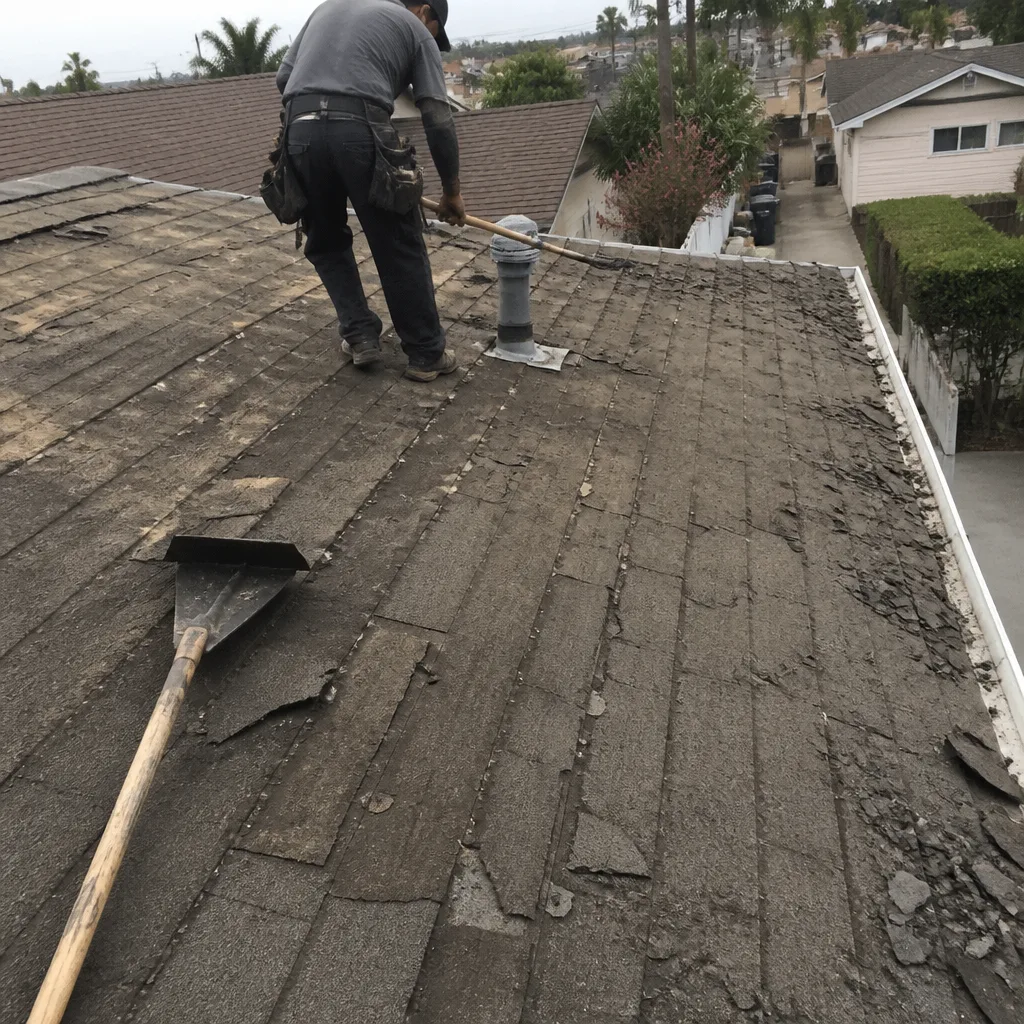 Before
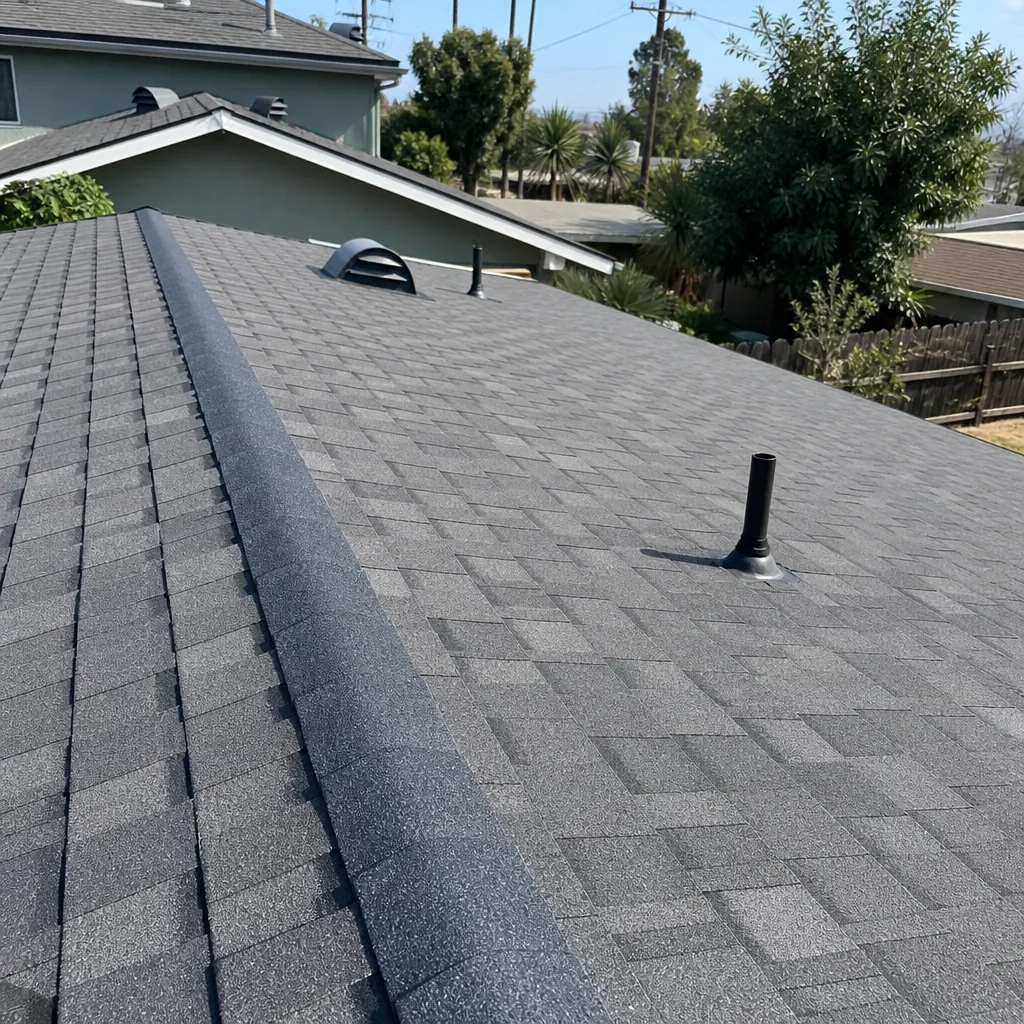 After
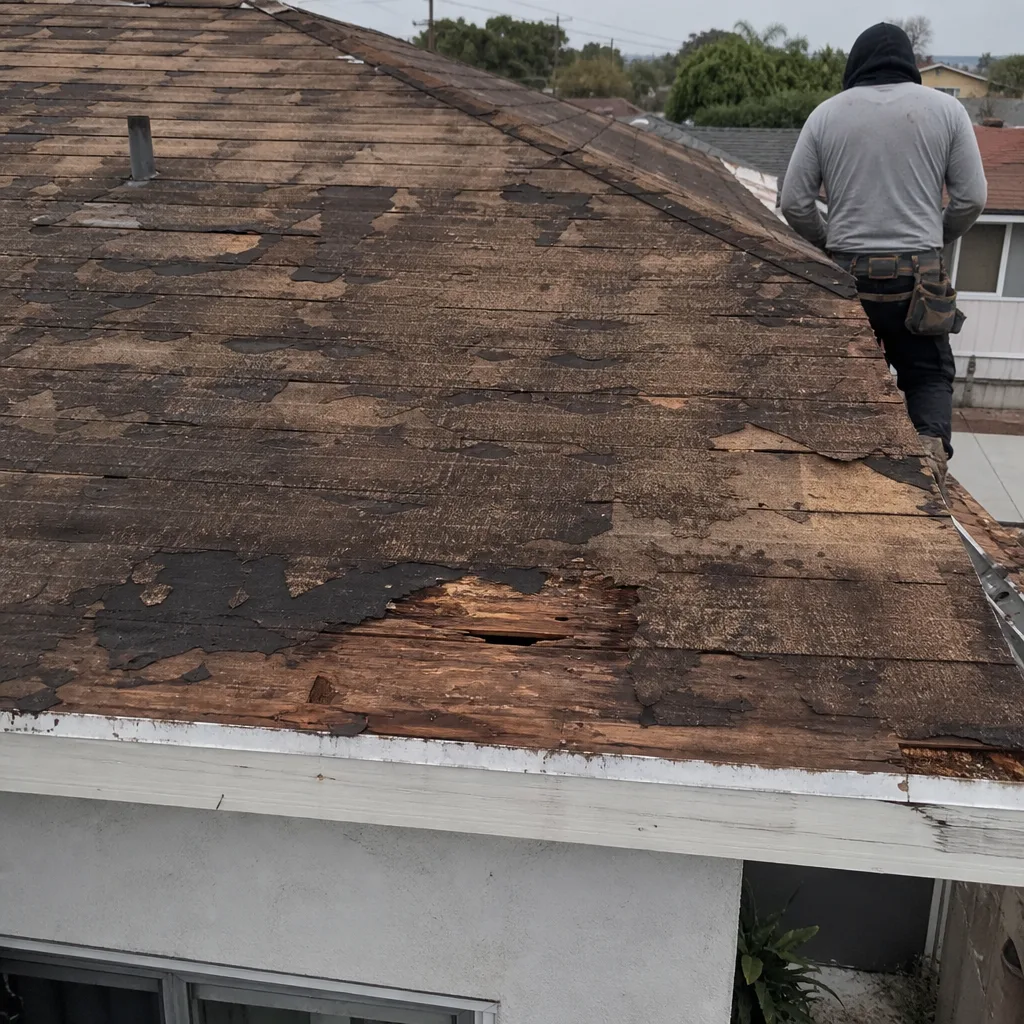 Before
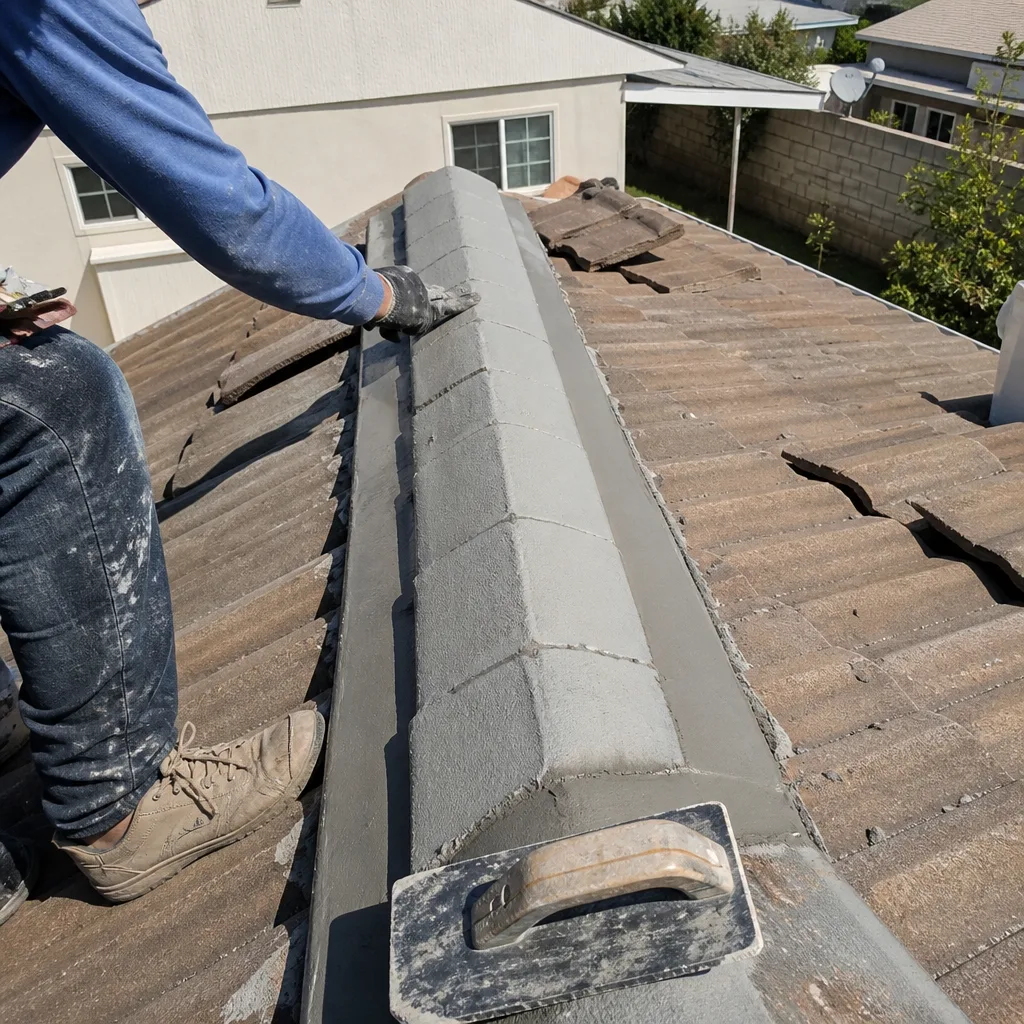 After
When to Call a Professional
Call a roofer when you see any of these: a water stain on a ceiling or wall; missing or visibly lifted shingles; granule piles at downspout bases; soft or sagging fascia; daylight visible through the attic decking; or a roof past year 15 that hasn’t been professionally inspected in three years. These are the moments where waiting costs money. Vista Roof Repair offers free estimates in El Monte, call (866) 253-8145, and we’ll walk the roof, tell you what’s actually happening, and give you options at every scale, from a simple repair to planning a full replacement. No pressure, no automatic replacement pitch, just the facts about what your roof needs.
Frequently Asked Questions
Twice a year, in March after the rain season and in October before Santa Ana winds, plus a quick ground check after any storm with gusts over 40 mph. El Monte’s climate damages roofs through UV exposure and dry rot more than through storms, so the semi-annual rhythm catches changes before they become failures. Call (866) 253-8145 if an inspection turns up anything you can’t identify.
The first visible sign is usually granule accumulation at downspout bases or slight curling at shingle corners on the west-facing slope. In El Monte’s sun, granule loss precedes most other failures by two to four years. If you see either, a roof inspection will tell you whether it’s normal aging or the start of a problem.
For a typical 1,200 to 1,600 square foot home in El Monte, annual DIY maintenance (sealant, replacement of one or two shingles, debris clearing) runs $75 to $200 in materials. Professional annual inspections run $150 to $350. Deferring maintenance until a leak appears typically costs $1,200 to $4,800 for the repair. The maintenance is the cheap part. Free estimates: (866) 253-8145.
You can and should inspect the six components visible from the ground yourself; they catch most problems. Four things require a roofer with a ladder: hidden decking rot, sidewall and chimney flashing integrity, low-slope membrane seams, and attic ventilation adequacy. A professional inspection covers both sets every time.
Yes, measurably. The same asphalt shingle that lasts 25 years in a milder climate often lasts 18 to 22 years in El Monte because the constant solar load degrades the asphalt and granules faster. A cooler roof surface, through proper attic ventilation and lighter shingle colors, can add two to four years of life. We work with GAF, CertainTeed, Owens Corning, and Atlas shingles, and we can recommend which lines hold up best in this specific sun exposure.
Roof inspections are a standalone service that we offer, and you can request one without any obligation to buy anything else. Estimates for repair or replacement are free. We’re the same team from first inspection through final installation, and we’ll tell you what your roof actually needs, whether that’s a $300 repair or a full replacement. Call (866) 253-8145.
The Bottom Line
El Monte’s climate is hard on roofs in predictable ways: UV-baked shingles, dry rot that grows through spring, and Santa Ana winds that exploit every weakness. The maintenance checklist that works here is built around those patterns: inspect in March and October, address granule loss early, keep valleys clear, document everything with photos, and distinguish real maintenance from cosmetic masking. A roof doesn’t need heroic effort, just consistent attention at the right times. And when something does need a professional eye, the same team at Vista Roof Repair can handle it from the first inspection through the final shingle.
Written by the team at Vista Roof Repair, serving El Monte since 2017.