
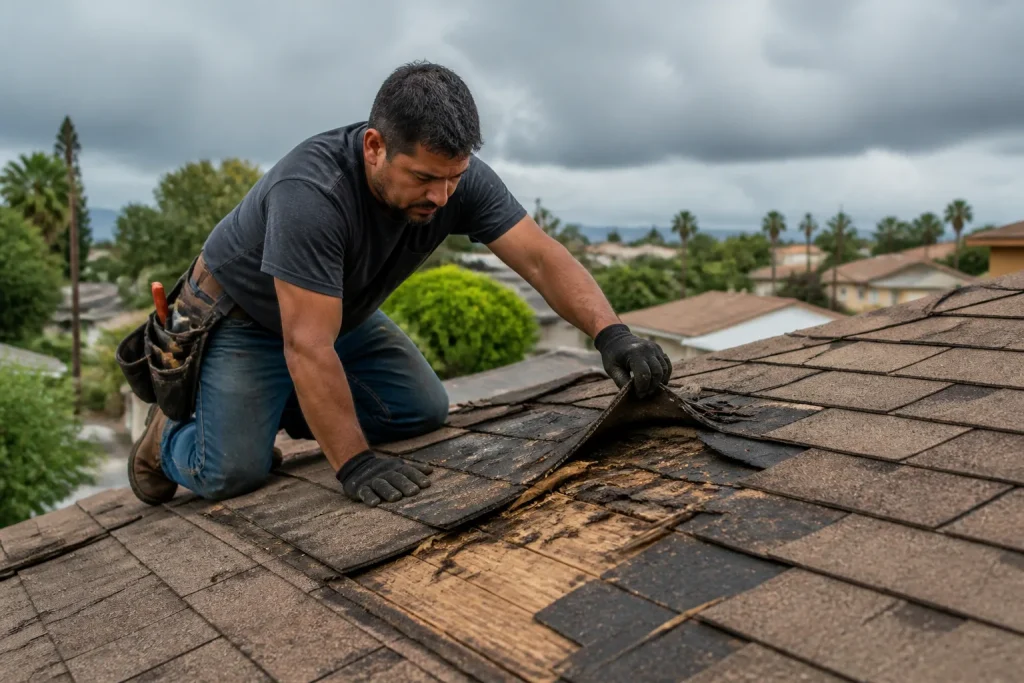
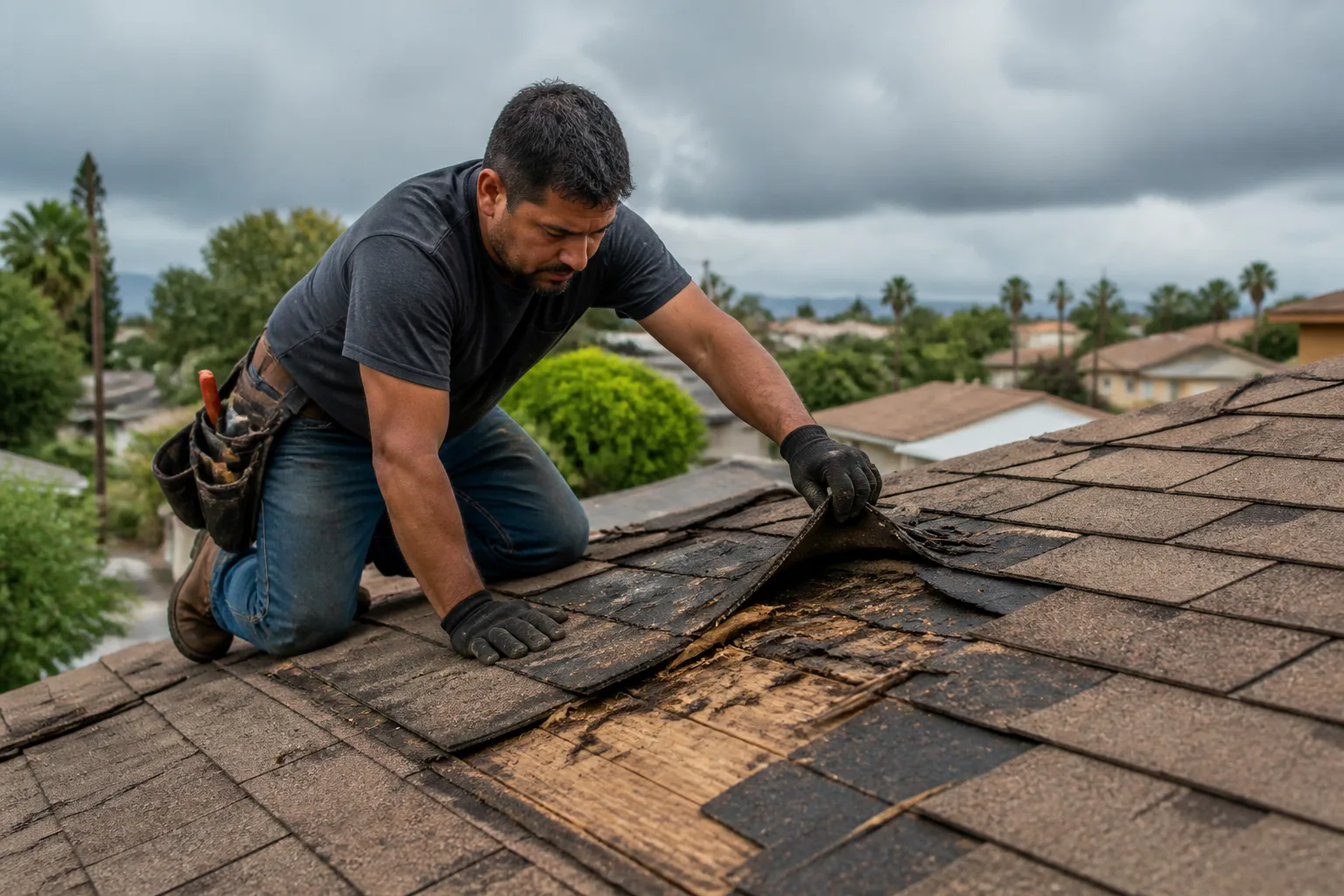
Emergency Roof Repair Near Me: What El Monte Homeowners Should Do First
If you’ve got water coming through your ceiling in El Monte, the first thing to do is contain the water inside, document everything with photos, then call a roofer. A roof breach rarely fixes itself, and every hour of delay lets water spread deeper into decking, insulation, and drywall. If you’d rather not handle the triage yourself, call Vista Roof Repair at (866) 253-8145 and we’ll walk you through it.
After a major wind event in the San Gabriel Valley, every roofing contractor within 20 miles of El Monte is booked solid within four hours. The homeowners who called in the first hour got on the schedule. The ones who decided to “wait and see if it gets worse” spent the next three days moving furniture and emptying buckets while water traveled from the roof deck into their living room ceiling. The 90 minutes after you discover damage matter more than most people think.
Here’s what to do, in order, without panicking or making the damage worse.
First 15 Minutes: Stop the Water Inside the House
Before you touch a ladder, before you call anyone, put down a bucket and a tarp on the floor. Water migrating through a ceiling follows the path of least resistance, which means it can surface 10 or 15 feet away from the actual roof breach. Look for sagging paint, bubbling drywall, or a waterline creeping across the ceiling. If you see a bulge forming, that’s water pooling behind the drywall. Puncture it carefully with a screwdriver at the lowest point so the water drains into your bucket instead of spreading. It sounds destructive, but a controlled drain hole is better than letting a 4-foot section of drywall collapse onto your furniture.
Move electronics, rugs, and anything absorbent out of the room. Drape plastic sheeting over furniture that can’t be moved. Water damage doubles the cost of a repair when it hits a sofa and warps a hardwood floor on top of the roofing work.
Next 30 Minutes: Document What You Can See
Photo documentation is the difference between a smooth insurance claim and a dispute that drags for a month. Adjusters want a specific sequence of evidence, not a few random shots of a wet ceiling.
Here’s the photo sequence we recommend in El Monte:
- Wide shot of the exterior showing the entire roof face where you suspect the breach
- Zoomed shots of visible damage: missing shingles, lifted flashing, debris impact, or bare decking
- Interior wide shot of the room where water is entering
- Close shots of water stains, active drips, or damp drywall, with something for scale like a quarter or a ruler
- Any fallen debris from the storm: tree limbs, shingles in the yard, anything that connects weather to the damage
Write down the date and time you noticed the leak, and a one-line note about the weather that preceded it. “Heavy winds Tuesday night around 11pm, noticed water at 7am Wednesday” is a useful record. “Leak somewhere in front bedroom, unsure when it started” is not. The written log matters when the adjuster asks timeline questions.
This is also the moment to create a folder on your phone for every photo, screenshot, and note. You’ll thank yourself later.
Safe Exterior Assessment: What You Can Check From the Ground
You do not need to get on the roof. In fact, after a storm, you probably shouldn’t. Walk the perimeter of your home and look up. Here’s what you can see from ground level in most El Monte homes:
- Missing or curling shingles near edges, ridges, or valleys
- Flashing pulled away from chimneys, vents, or skylights
- Granules collecting in gutters or downspouts, which signals shingle surface loss
- Tree limbs resting on the roof or visible impact points from fallen branches
- Daylight or gaps at the ridge cap or where roof planes meet
One thing we’ve seen repeatedly in the neighborhoods around Valley Boulevard and Arden Drive: homeowners climb up with a phone to take photos, and the real damage is structural, not cosmetic. A shingle that looks fine from the top can be cracked and compromised underneath. If you’re walking on a roof after a storm, you’re adding weight to a system that may already be weakened. Stay on the ground.
This is also where our full-cycle approach comes into play. When we come to an El Monte home for an emergency call, we start with a roof inspection in El Monte so you know the exact scope before any repair is priced. That inspection is a standalone service for us. We’ll tell you what your roof actually needs, even if the answer is “this is minor and can wait.”
To Tarp or Not to Tarp: What Most People Get Wrong
A tarp is temporary containment. It is not a repair. And done incorrectly, a tarp causes problems that cost more than the original damage.
The mistakes we see most often on emergency calls in El Monte:
- Nailing the tarp directly into the roof surface. Every nail hole you create is a new potential leak. Tarps should be anchored with boards laid flat and nailed at the edges only, or with proper sandbags placed where they won’t slide. Direct nailing through shingles voids your current shingle condition and complicates the eventual repair.
- Using the wrong tarp material. Blue poly tarps sold at hardware stores are 5 to 6 mil thick and degrade in sunlight within four to six weeks. If the tarp needs to hold for longer than that while you wait on a claim or a full roof replacement in El Monte, you need a heavier-duty material. Thin tarps tear in the next wind event and now you have two problems.
- Tarping too small an area. Your tarp needs to extend at least four feet above the damaged section and cover the entire breach, overlapping the ridge line when possible. A tarp that only covers the hole lets water run under the edges and travel sideways into unaffected areas.
- Leaving the tarp on too long. Tarps trap heat and moisture against the roof surface. In El Monte summers, that’s a recipe for accelerated shingle deterioration and trapped condensation. A tarp is a bridge, not a destination.
If you’re tarping yourself as a stopgap, document that too. Insurers want photos of your mitigation effort. It shows good faith and prevents the “neglect” argument later.
What “Emergency Service” Actually Means From a Contractor
There’s a spread between what homeowners expect from an emergency call and what some contractors actually deliver. Here’s what a legitimate emergency service includes, and what it doesn’t.
When you call a roofer in El Monte with an active leak, the first response should be a conversation about containment, not a quote. The company should ask: When did you notice the water? Is it actively dripping right now? Can you see visible damage from the ground? These questions tell the contractor whether you need immediate tarping, same-day assessment, or a scheduled visit within 48 hours.
Be wary of companies that charge an “emergency dispatch fee” and then show up the next morning with a routine inspection. Emergency rates should correspond to emergency response: someone on site the same day during daylight, immediate containment measures if needed, and a written scope of the damage. If the contractor can’t get someone out until Thursday, that’s a standard appointment, and it should be priced as one.
At Vista Roof Repair, we don’t hand your job to a subcontractor mid-project. The same team that inspects your roof is the team that repairs it, from the first patch to a full tear-off if that’s what’s required. And if you’re weighing repair against replacing, we’ll lay out both paths honestly. Some El Monte roofs with storm damage need a full replacement because the decking is compromised or the existing shingle system is discontinued. But plenty don’t. We carry material from manufacturers like GAF, CertainTeed, and Tamko so the recommendation follows the roof, not our inventory.
24-Hour vs. 72-Hour Damage: Don’t Panic Into a Bad Decision
Not every roof problem is an emergency. The instinct to “get someone out here immediately” is understandable, but misclassification leads to bad decisions: overpaying for after-hours service on a non-urgent issue, or signing a contract under pressure for a replacement you didn’t need. Here’s how to separate the urgent from the merely important.
Address within 24 hours:
- Active water entering the living space
- Visible gaps or holes in the roof surface, including missing shingle sections larger than a few feet
- Fallen branches or debris that have punctured the surface
- Water running down interior walls or through light fixtures
- Flashing torn away around vents, skylights, or chimneys exposing the underlayment
Safe to schedule within 72 to 96 hours:
- Small sections of missing shingles with no evidence of interior water
- Cracked shingles that are still in place and not lifting
- Granule loss that doesn’t expose the mat underneath
- Minor flashing gaps that haven’t allowed water through in previous rain
- Soft spots or curling that are aging signs rather than acute storm damage
The distinction matters because water migration into El Monte roof decks accelerates over time, especially in our wet winter months. What starts as a few damp spots in the attic becomes a replaced ceiling and mold remediation if ignored for two weeks. But the opposite is also true: dry damage that isn’t actively leaking can usually wait a few days while you get a proper assessment instead of a panicked repair.
If you’re unsure which category you’re in, that’s exactly what the roof repair in El Monte assessment is for. We’d rather spend 20 minutes on the phone helping you triage than have you pay for emergency service you didn’t need. Call (866) 253-8145 and describe what you’re seeing. We’ll give you a straight answer.
What El Monte’s Climate Means for Roof Emergencies
El Monte sits at the southern edge of the San Gabriel Valley, which means two seasonal realities for roofing: hot, dry summers that bake shingle surfaces and accelerate cracking, and winter storm systems that funnel through the mountains with wind gusts strong enough to lift edges and tear flashing. The roofs we see most on emergency calls in neighborhoods like Mountain View and Norwood are asphalt shingle systems 15 to 25 years old, often with original flashing, and the failure points are predictable.
Summer heat embrittles the shingle mat. When the Santa Ana winds push through in the fall, those brittle shingles don’t flex; they snap. The first rain of November finds every crack. That’s why a run of emergency calls in El Monte always clusters after the first sustained wind event of autumn. If your roof is in that 15-plus year range and you can see curling from the ground, the emergency isn’t a surprise, it’s a schedule.
Boral and CertainTeed both make shingle lines specifically designed for high-heat climates, and we’ve installed both across El Monte and nearby Montebello. The material choice doesn’t change the emergency response; it changes how often you’re in this situation. A roof that’s rated for sun exposure lasts longer in San Gabriel Valley summers than a basic builder-grade shingle.
The Bottom Line
Emergency roof repair in El Monte comes down to sequence: contain the water inside, document everything with photos and a written log, assess what you can from the ground without climbing, tarp correctly if you can’t get immediate service, and know whether you’re in a 24-hour or 72-hour window. The homeowners who come through a roof emergency without catastrophic secondary damage are the ones who act in the first 90 minutes with clear steps instead of panic-searching. If you’re in El Monte and need help, Vista Roof Repair offers free estimates. Call (866) 253-8145 and we’ll help you figure out what the roof actually needs, whether that’s a patch, a tarp, or a full conversation about replacement. You’ll get a straight answer, not a sales pitch.
Frequently Asked Questions
Call as soon as you’ve contained the interior water and taken photos. Same-day response is appropriate for active leaks and visible structural damage. For minor issues with no active water, a call within 24 to 48 hours is usually fine. Call (866) 253-8145 and describe the situation; we’ll help you determine the urgency level and schedule accordingly.
Most homeowner policies in El Monte cover sudden, accidental storm damage, but the claim depends on the documentation and the cause. Insurance generally does not cover gradual deterioration or neglect. Take clear photos of the damage, write down the timeline, and contact your insurer as soon as possible. If you need a professional assessment to support your claim, Vista Roof Repair can provide one.
For temporary containment, a small patch can work if you know what you’re doing and the area is safe to access. For anything involving flashing, structural decking, or a roof that’s more than a single story up, a licensed contractor is the safer route. Storm-damaged roofs can have hidden structural issues that are easy to miss from the surface.
Costs vary by the type and scale of damage, and we don’t quote without seeing the roof. A small shingle replacement costs less than a structural deck repair, and temporary tarping is a separate line item. You’ll get a written line-item quote before any work begins, so you know exactly what you’re paying for. Call (866) 253-8145 for a free estimate.
Written by the team at Vista Roof Repair, serving El Monte since 2017.
Need Roofing Help?
Call Vista Roof Repair — licensed & insured, here with fast after-hours help in La Habra.
(866) 253-8145