
Last updated October 30, 2026
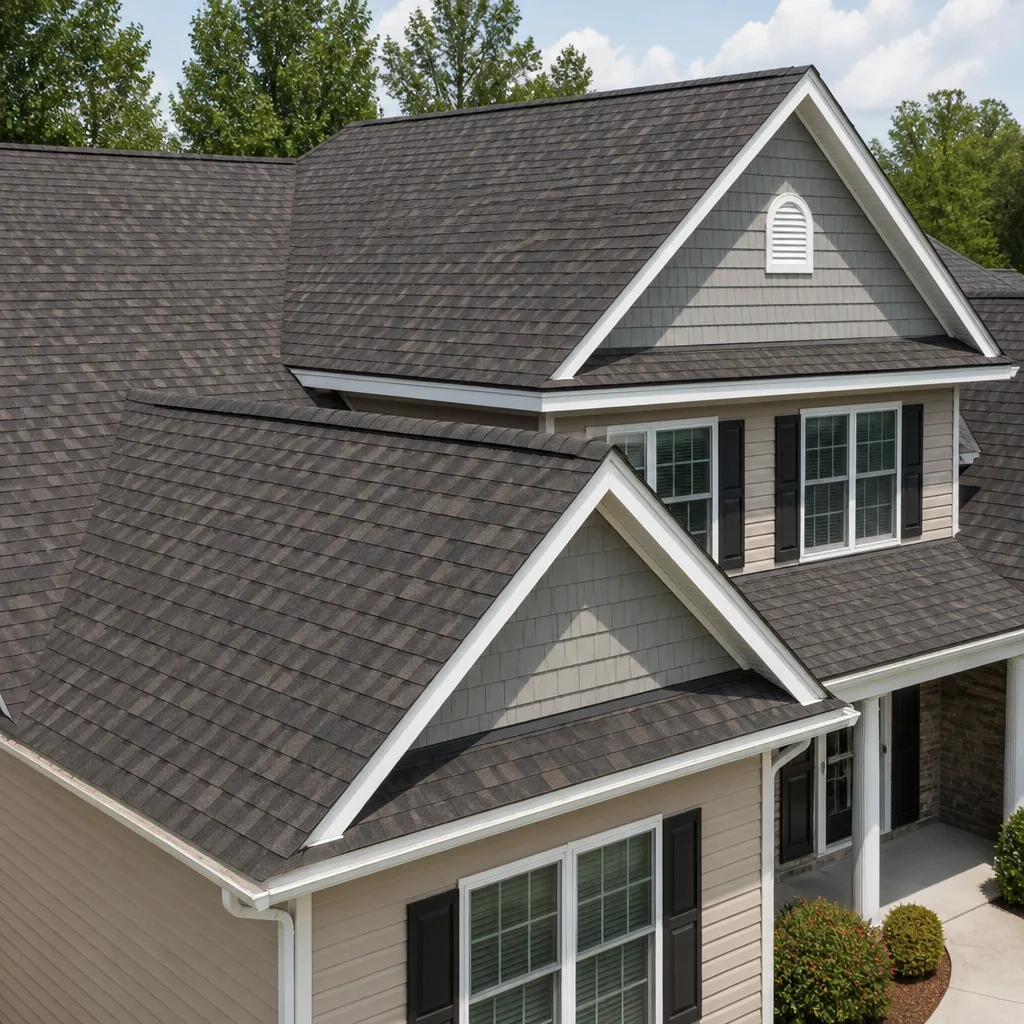 Architectural shingles
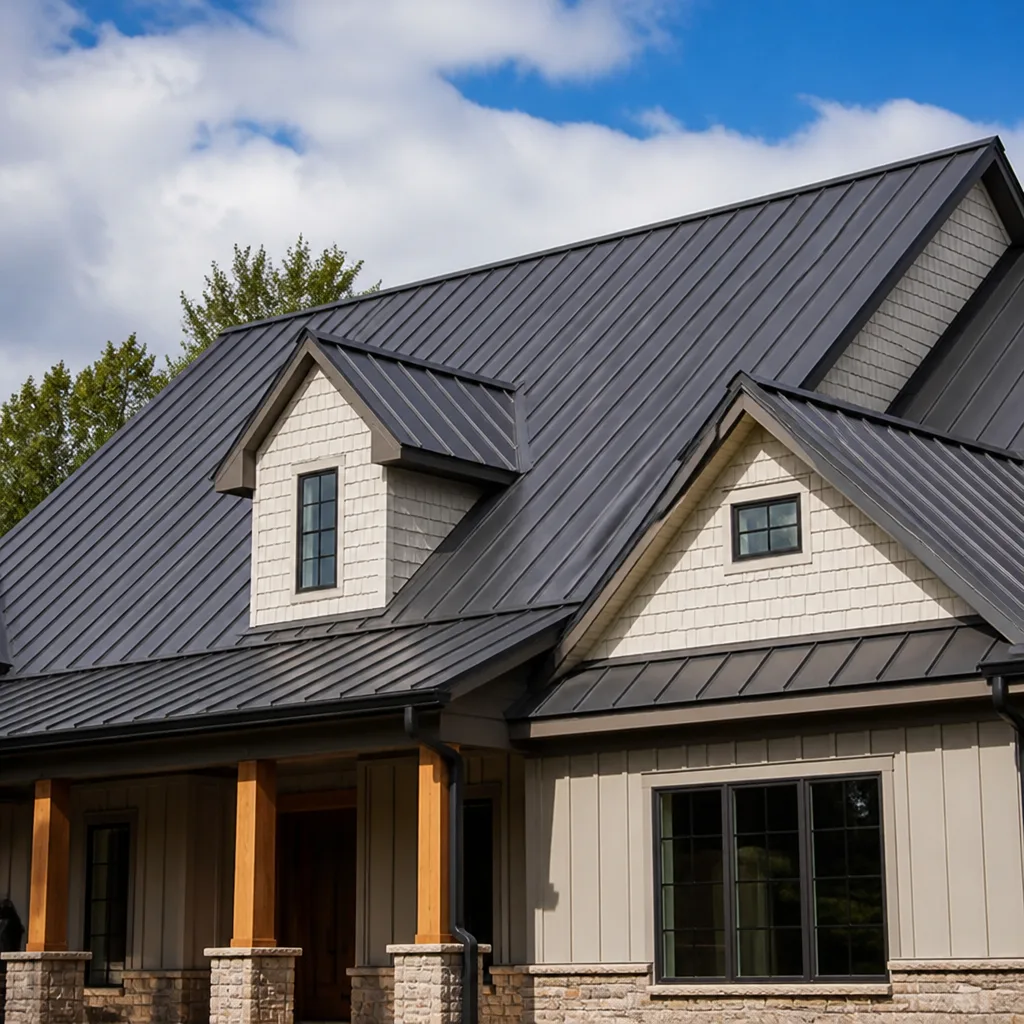 Metal roofing
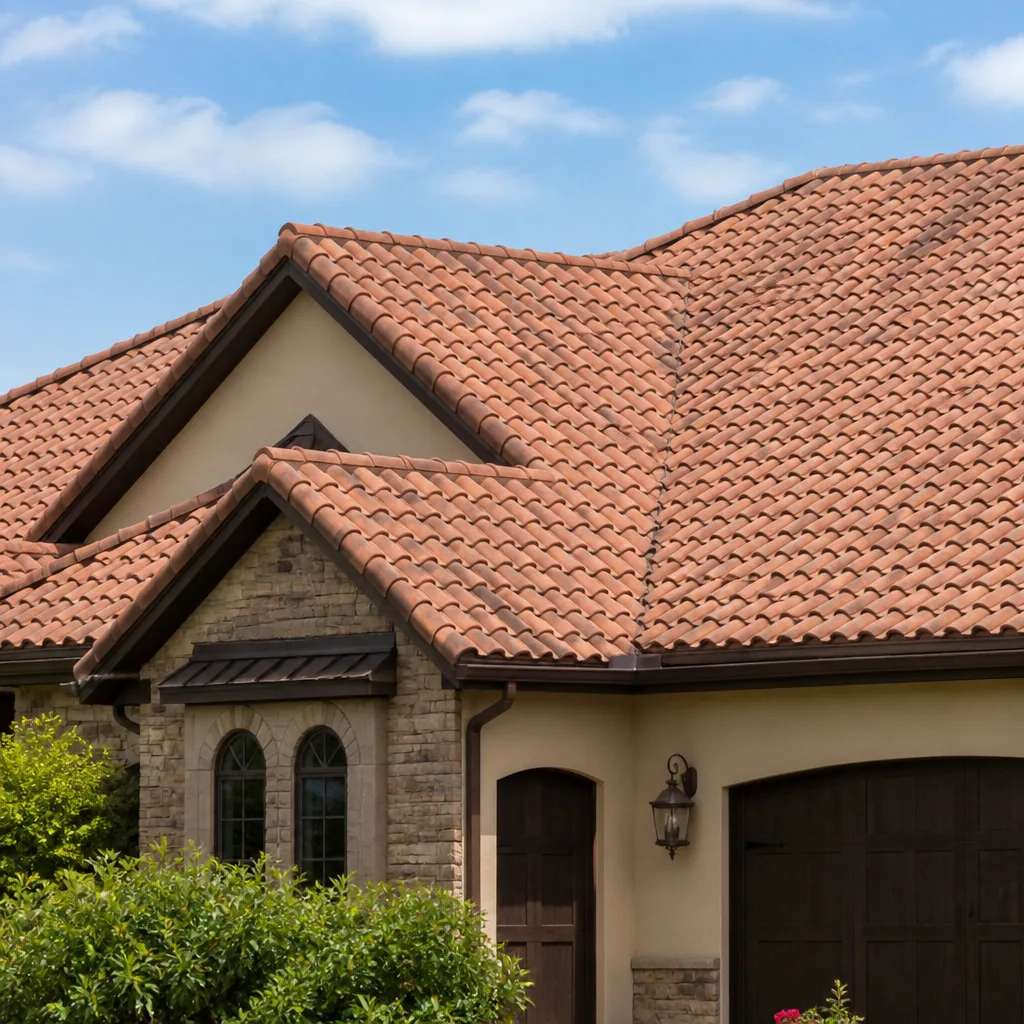 Tile roofing
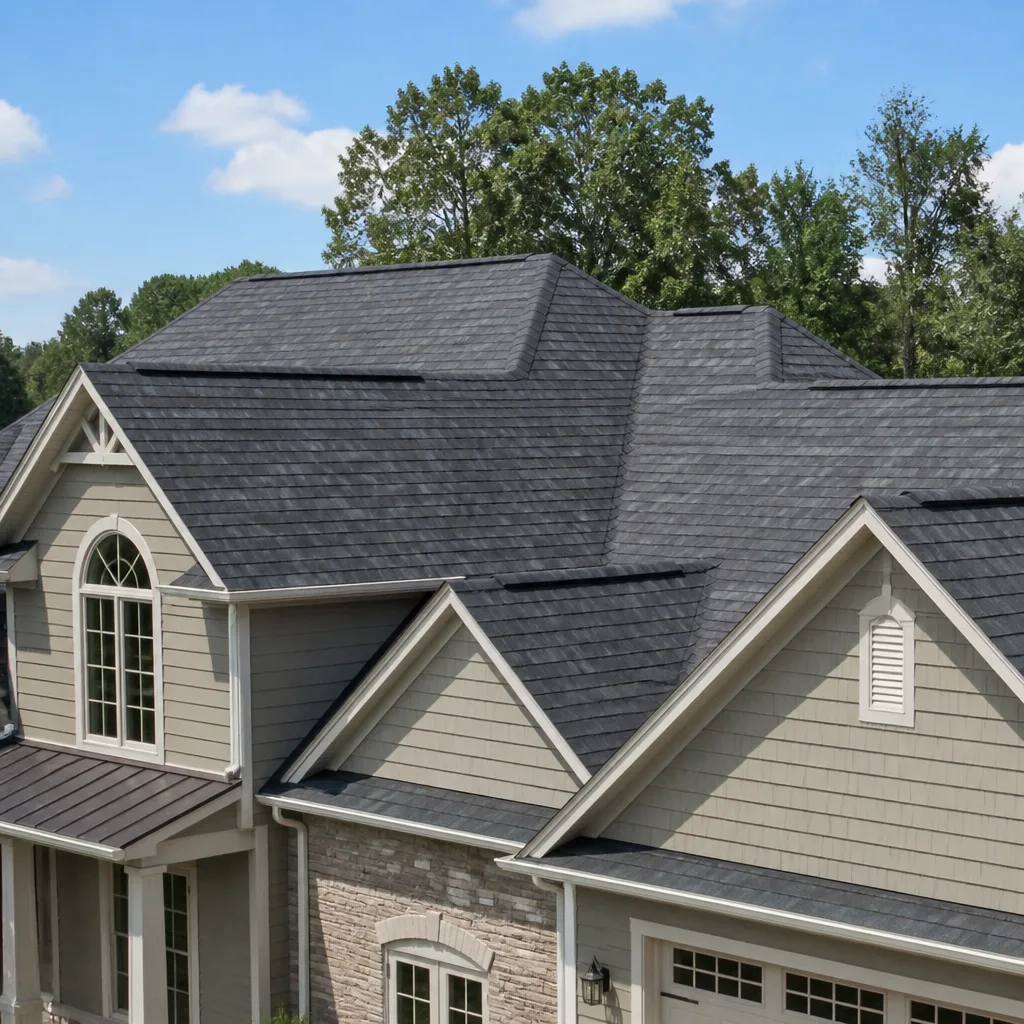 GAF
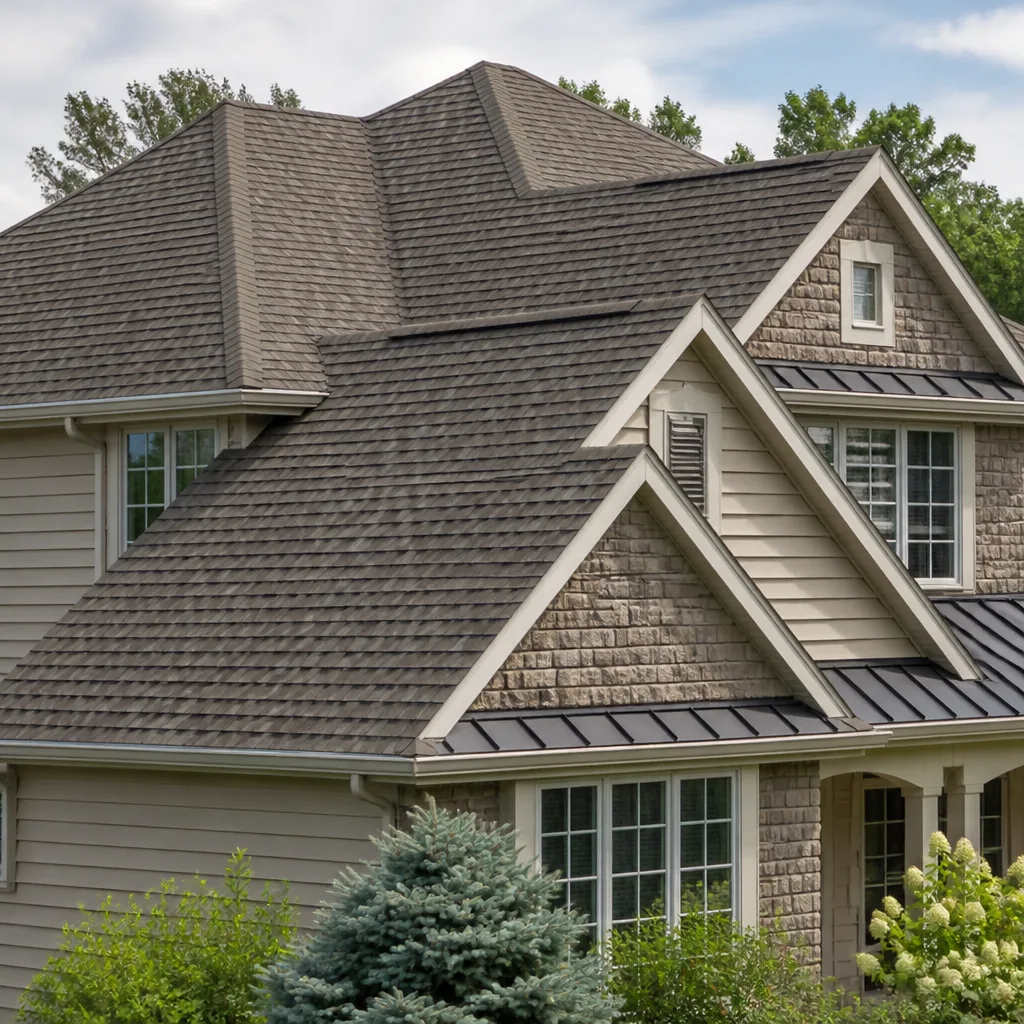 Owens Corning
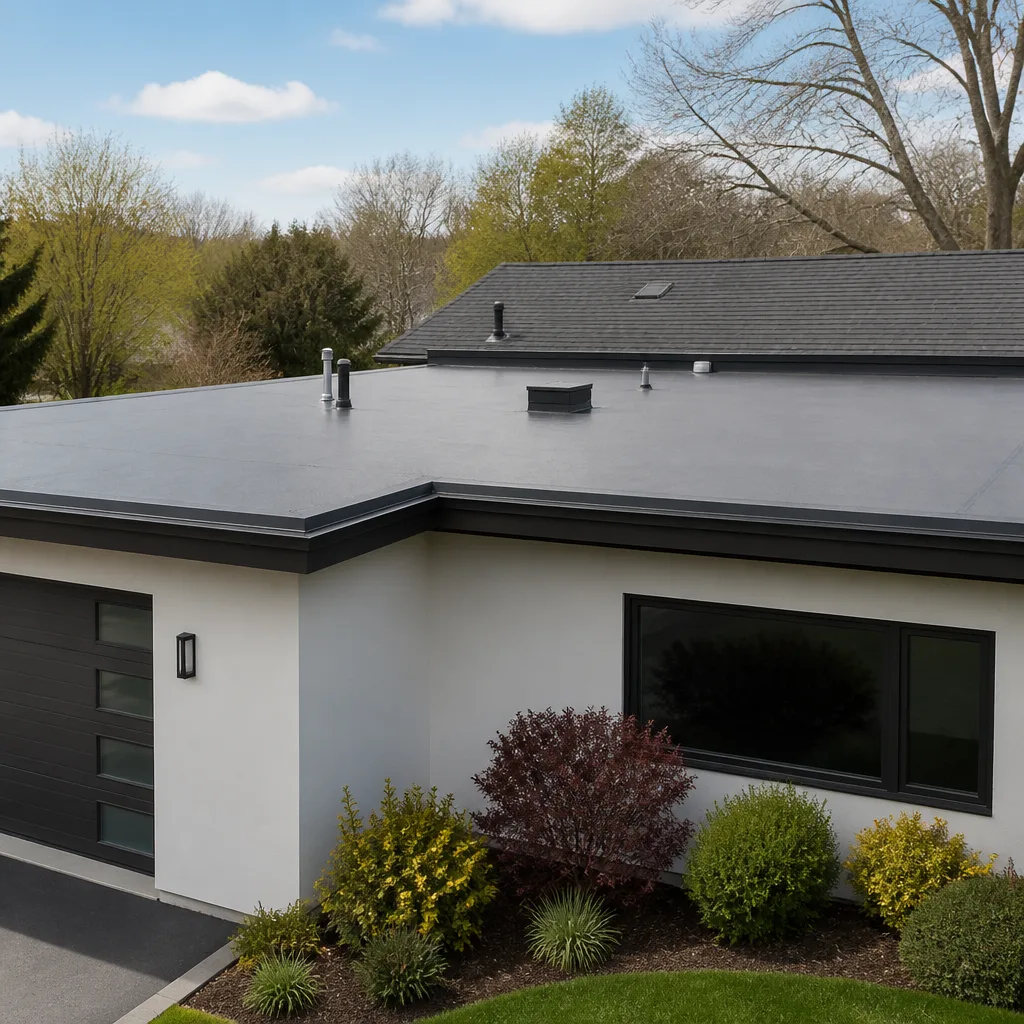 Flat & low-slope
Free roof inspection with deck photos before we talk money - GAF and Owens Corning certified installation
The Complete Roof Repair Guide for El Monte Homeowners
Most roof repair guides are written for a hypothetical California climate. El Monte sits in the San Gabriel Valley’s heat trap, where summer attic temperatures routinely exceed 160°F, a condition that degrades sealants and adhesives at roughly twice the rate of coastal zip codes. Add the Santa Ana wind corridor that funnels through the valley each fall, plus the marine layer moisture cycles that blanket the city in the spring, and you have a roofing environment that behaves differently than Los Angeles, Long Beach, or even Pasadena. This guide explains what that means for your roof, how El Monte’s specific conditions create distinct damage patterns, and how to sequence a repair correctly so you’re not paying for the same fix twice.
Styles & brands we work with
Quick Answer
Roof repair in El Monte means addressing damage caused by three overlapping forces: Santa Ana wind uplift that targets gable ends and ridge lines, extreme valley temperature swings that fatigue flashing and sealants, and moisture cycling that accelerates rot in older decking. The right repair starts with a standalone roof inspection that identifies what actually failed, not just what’s visible from the ground. From there, Roof Repair services range from targeted shingle replacement and flashing resealing to partial deck replacement, depending on what the inspection uncovers.
Table of Contents
- How Santa Ana Winds Damage El Monte Roofs
- The Temperature Swing Factor: Flashing Fatigue in the San Gabriel Valley
- El Monte’s Housing Stock: How Roofing Systems Fail by Era
- The Right Repair Sequence: Inspection Before Material Order
- Repair vs. Replacement: The 40% Threshold
- Material Choice for El Monte Repairs: What Holds Up in This Climate
- Common Mistakes to Avoid
- When to Call a Professional
- Frequently Asked Questions
- The Bottom Line
How Santa Ana Winds Damage El Monte Roofs
El Monte sits directly in the path of the Santa Ana wind corridor that squeezes through the San Gabriel Valley. When high-pressure systems build over the Great Basin, air rushes down through the Cajon Pass and the San Gabriel Canyon, gaining speed as it channels through the valley floor. By the time those winds reach El Monte neighborhoods like Mountain View and Park El Monte, they’re hitting roofs at sustained speeds that routinely top 30 mph, with gusts that can double that.
The damage pattern we see repeatedly in El Monte is specific and predictable. Wind doesn’t press down on a roof; it pulls upward. As air accelerates over the roof’s surface, it creates negative pressure, and that uplift force concentrates on three zones: the gable ends, the ridge line, and the first two courses of shingles along the eaves. On a gable-end roof, the wind hits the vertical wall, then wraps around the corners, peeling shingles from the edge inward. On the ridge line, the wind accelerates as it crosses the peak, and poorly sealed ridge caps lift first.
Here’s what we look for after a Santa Ana event:
- Lifted or missing shingle tabs along the gable edges – the most common wind damage in El Monte, and the easiest to spot from the ground.
- Ridge cap shingles with curled or lifted edges – these often look fine from the street but fail when inspected up close.
- Granule loss concentrated on the windward slope – the southwest-facing slopes take the brunt of Santa Ana winds and show accelerated wear.
- Stapled shingles that have popped loose – homes built before the mid-1990s code changes often have stapled, not nailed, shingles, and staples fail under repeated uplift cycling.
The timing matters. Santa Ana season runs September through November, with a secondary spike in December and January. If you notice shingles in your yard after a wind event, or if you can see lifted tabs from the street, schedule an inspection sooner rather than later. A single lifted shingle exposes the underlayment, and once water gets under the roofing material, the repair scope expands from one shingle to deck repair.
The Temperature Swing Factor: Flashing Fatigue in the San Gabriel Valley
Coastal roofers treat flashing as a set-and-forget component. In El Monte, flashing is the first thing to fail on roofs that are otherwise in decent shape. The reason is the temperature delta. On a January night, El Monte can drop into the low 40s. By July, attic temperatures in an unventilated San Gabriel Valley home exceed 160°F, which translates to a roof surface temperature well above 180°F. That’s a 140-degree swing twice a year, every year.
Flashing, the metal strips that seal the joints where roof planes meet walls, chimneys, vents, and skylights, expands and contracts with every temperature cycle. The metal itself can handle the movement. What fails is the sealant. Over five to ten years, the thermal expansion and contraction breaks the bond between the flashing and the roofing material. Hairline gaps open. Water finds those gaps during winter rains, and by the time you see a ceiling stain, the leak has been active for weeks.
The specific flashing failures we diagnose most often on El Monte homes:
- Step flashing along chimneys and sidewalls – the vertical joints where a roof plane meets a wall are the most common leak source on homes throughout the San Gabriel Valley.
- Pipe boot cracking – the rubber gaskets around plumbing vents degrade faster in high-heat environments. El Monte summers bake rubber boots until they crack and split.
- Valley metal separation – roof valleys channel the most water during rain events, and when the valley flashing separates from the shingles, leaks appear that are nearly impossible to trace from inside the house.
- Counter-flashing gaps on brick chimneys – older El Monte homes with masonry chimneys often have counter-flashing that’s been in place since the original construction, and the mortar joints that hold it have loosened over decades of thermal cycling.
If your roof is between 12 and 18 years old and you’re seeing first-time leaks, flashing is the most probable culprit. Shingle failure tends to be visible. Flashing failure is sneaky, and it’s the repair that separates a thorough inspection from a surface-level one.
El Monte’s Housing Stock: How Roofing Systems Fail by Era
El Monte grew in distinct building booms, and each era’s roofing system fails in its own way. Understanding which era your home belongs to tells you what to expect when problems appear. The city’s housing stock is heavily weighted toward the post-war period, with significant infill construction in the 1970s and 1990s.
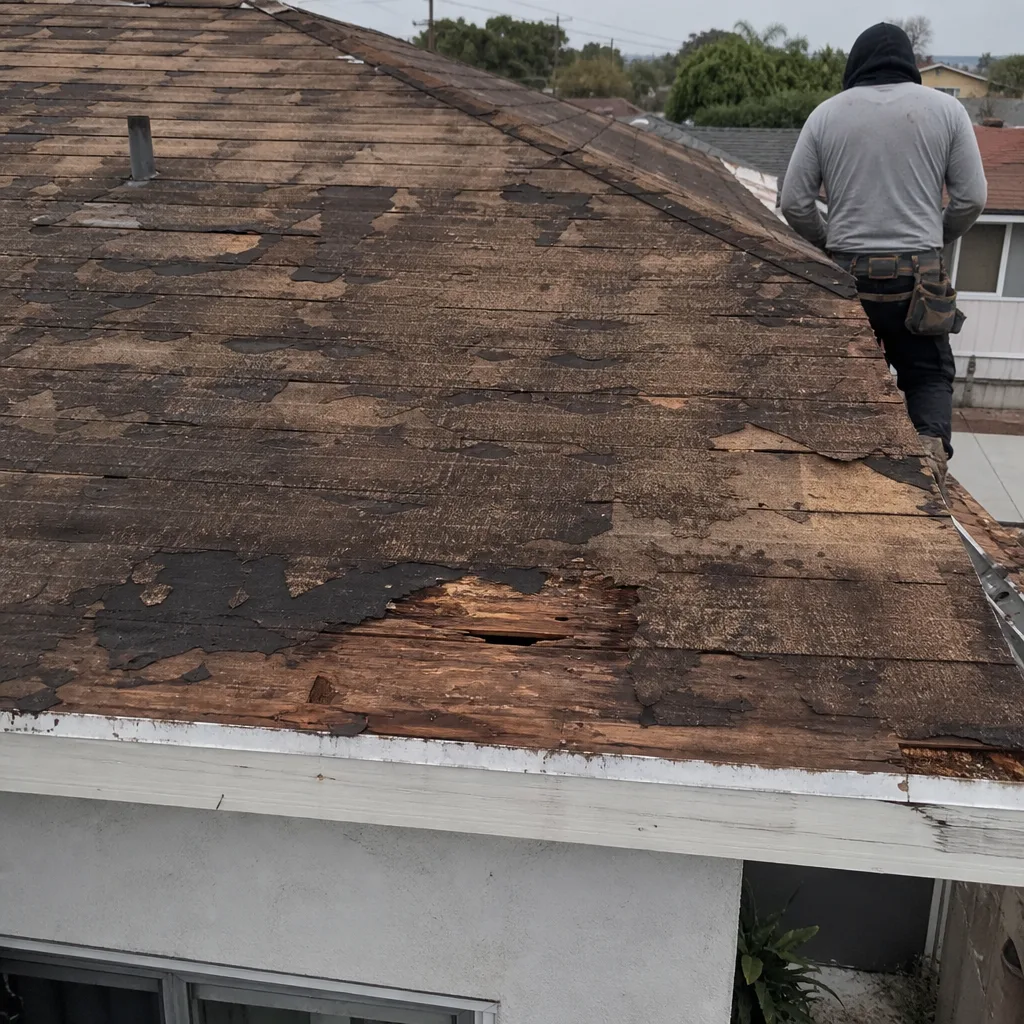
1950s-era homes (composition shingle): These original roofs, concentrated in neighborhoods like Norwood and the streets north of Valley Boulevard, were built with organic felt-based composition shingles, often installed over spaced or solid sheathing that’s now 70 years old. Most of these roofs have been replaced at least once, but the underlying framing and decking date to the original construction. The failure pattern here is deck rot along the eaves and around penetrations. When a 1950s home has a leak, the water has often been traveling through the deck layer before it shows on the ceiling, and the repair frequently involves replacing deck sections, not just shingles. Ventilation is also a common deficiency; original construction rarely included ridge or soffit vents, which accelerates heat-related shingle degradation.
1970s-era homes (built-up and gravel roofs): El Monte saw significant apartment and multi-family construction in the 1970s, and many of these buildings have low-slope or flat built-up roofing systems. These roofs fail differently than pitched shingle roofs. The common failure points are the seams between roofing sheets, the flashing at parapet walls, and ponding water that sits in low spots after rain. A built-up roof in El Monte that hasn’t been maintained properly will show blistering, alligator cracking, and seam separation. Repairs on these systems are targeted: seam resealing, spot patching, and drain clearing. But the underlying issue is often drainage slope, and no amount of patching fixes a roof that holds water.
1990s-era homes (3-tab shingle): The construction boom of the 1990s filled in El Monte’s remaining lots with homes roofed in standard 3-tab asphalt shingles, often installed with staples and without proper ice-and-water shield at the eaves. These roofs are now 25 to 35 years old, which is past the service life of 3-tab shingles in a high-heat climate. The failure pattern is uniform granule loss, curling tabs, and nail pops along the rake edges. By the time a 1990s 3-tab roof in El Monte starts showing visible wear, the shingles are typically within two to three years of the end of their functional life, and repairs become a stopgap rather than a long-term solution.
The Right Repair Sequence: Inspection Before Material Order
The most expensive roofing mistake we see in El Monte is buying materials before understanding the problem, a topic covered in our DIY vs Professional Roofing: The El Monte Homeowner’s Decision Guide. Homeowners see a few missing shingles after a wind event, call around for pricing on shingle replacement, and hire the lowest bidder to nail down new tabs. Two months later, the leak is back, because the shingles weren’t the root problem; the failed flashing underneath was letting water run under the shingle course. Now the repair costs double, because the decking that got wet during those two months has started to rot.
The correct sequence looks like this:
- Schedule a standalone roof inspection. A proper inspection in El Monte means walking the roof surface, checking the attic from the inside, and examining the flashings, penetrations, and deck condition up close. Our team offers roof inspections in El Monte as a standalone service. There’s no obligation to buy a replacement, and the inspection report tells you exactly what failed and what didn’t.
- Identify the root cause, not just the symptom. Missing shingles after a windstorm are a symptom. The root cause might be deteriorated underlayment, failed fasteners, or a ventilation problem that’s been baking the shingles from below. The inspection should answer why the damage happened, not just what’s damaged.
- Map the full repair scope. This means documenting every affected area, including the ones that aren’t visible from the ground or from inside the attic. El Monte’s temperature swings mean that a leak that appears at the ceiling often originates several feet away from the interior stain. Water travels along rafters and sheathing before it drops.
- Order materials after the scope is defined. Only once you know exactly what the repair requires should you choose materials. If the repair involves a section of shingles, you’ll match the color and profile as closely as the current market allows. If it involves flashing, you’ll spec the right gauge and coating for the application. Ordering first means you either over-buy or, worse, under-buy and end up with mismatched patches.
- Execute the repair with proper fastening and sealing. El Monte’s wind and heat conditions mean that shortcuts in fastening show up quickly. Nails should be placed per manufacturer spec, sealant should be compatible with the roofing material, and the repaired area should integrate with the surrounding roof, not sit on top of it.
This sequence matters because it prevents the stack-up of small failures that turn a $400 flashing repair into a $4,000 deck replacement. The inspection comes first for a reason.
Repair vs. Replacement: The 40% Threshold
The honest math on repair versus replacement in El Monte works like this: if the total cost of repairs needed now, plus the anticipated cost of repairs over the next five years, exceeds 40% of the cost of a full replacement, replacement is the better financial decision. That’s not a hard rule for every situation, but it’s the threshold we use when advising homeowners, and it keeps the conversation honest.
Here’s a realistic example. A 28-year-old 3-tab roof on a 1990s-era El Monte home develops leaks around two pipe boots and one section of flashing. The repair quote comes in at $1,200. But the inspection also shows granule loss across the entire roof, curling tabs on the south-facing slope, and nail pops along both rake edges. The roof is functionally at the end of its service life. Over the next five years, the homeowner will likely spend another $2,500 to $4,000 on piecemeal repairs. That’s $3,700 to $5,200 in total repair spend on a roof that costs $9,000 to $12,000 to replace. The math says replace.
On the other hand, a 12-year-old architectural shingle roof with a failed pipe boot and one section of step flashing is a repair. The fix costs $300 to $600, the roof has 15-plus years of life left, and no reasonable contractor would recommend replacement.
The key variable is the condition of the decking underneath the roofing material. If water has been getting past the shingles and underlayment for months, the deck may be soft, delaminated, or actively rotting. That condition is only discoverable during an inspection, and it changes the repair-versus-replacement calculus instantly. A small leak with a rotted deck underneath is a structural problem, not a cosmetic one.
We’ll tell you what your roof actually needs. If it’s a repair, that’s what we quote. If the numbers point to replacement, we’ll show you the math and let you decide. We offer roof repair in El Monte and roof replacement in El Monte under the same team, so the recommendation is never shaped by which service we’d prefer to sell. It’s shaped by what the inspection shows.
Material Choice for El Monte Repairs: What Holds Up in This Climate
Not every shingle performs equally well in El Monte’s specific conditions. The combination of high heat, UV exposure, wind uplift, and moisture cycling means that material choice matters more here than it does in milder California climates. When we repair a roof, we match the existing material where we can, but when a repair is part of a larger conversation about the roof’s future, material choice comes to the front.
The brands we work with include GAF, CertainTeed, Owens Corning, IKO, Atlas, Tamko, and Boral. We’re not tied to any single manufacturer, and that matters for one specific reason: your repair should use the material that matches both your existing roof and your budget, not whatever the contractor happens to have on the truck. A homeowner with a GAF roof gets GAF-compatible repair materials. A homeowner with a Tamko roof gets Tamko. A homeowner whose budget is tight gets value-tier options that still perform well in the San Gabriel Valley climate.
For most El Monte homes, architectural shingles with a high wind rating are the appropriate choice for any repair that extends beyond a few shingles. The wind rating matters because of the Santa Ana corridor. Look for shingles rated for 110 mph or higher. Asphalt shingles with a high reflectivity rating also help manage heat, which extends the sealant life at the flashing joints.
For low-slope sections, which are common on 1970s-era El Monte apartment buildings and some home additions, the repair conversation shifts to modified bitumen and single-ply membranes. These systems seal differently than shingle roofs and require specific repair techniques. Seam integrity, not shingle condition, is the measure of whether a low-slope repair will hold.
Common Mistakes to Avoid
- Skipping the attic inspection. Half of what we diagnose on El Monte roofs comes from the inside. Deck stains, daylight through the sheathing, and rafter moisture all tell the story of where water has been traveling. A ground-level or drone-only inspection misses all of it.
- Replacing shingles without checking the underlayment. If the underlayment is compromised, new shingles nail down onto a surface that’s already failing. The repair looks fine from the street and leaks within a year.
- Using mismatched sealant. Not all roofing sealants are interchangeable. The wrong sealant on a particular flashing material will fail within a season, especially under El Monte heat. The sealant has to match the material it’s sealing.
- Ignoring ventilation problems. An El Monte attic that hits 160°F in July is cooking the shingles from below. If the repair doesn’t address the ventilation deficiency, the new shingles will degrade at the same accelerated rate as the old ones.
- Waiting for the leak to show on the ceiling. By the time water stains the ceiling, the leak has been active for weeks and the deck has been absorbing moisture the entire time. Interior stains are the last symptom, not the first.
- Choosing a contractor based on price alone. The lowest bid on an El Monte roofing repair often means the inspection wasn’t thorough, the materials are value-tier regardless of what’s already on the roof, or the crew is rushing through multiple jobs in a single day. A repair that fails costs twice what the original repair would have cost.
When to Call a Professional
Roof work involves heights, heavy materials, and the risk of making a small problem significantly worse. If you can see daylight through your roof from inside the attic, if you’ve noticed missing shingles after a wind event, if you have water stains spreading on your ceiling, or if your roof is more than 15 years old and has never been professionally inspected, call a roofer who works in El Monte regularly and understands the valley’s specific conditions. Flashing failures, in particular, are almost impossible to diagnose correctly from the ground, and the leak pattern on the ceiling rarely matches the actual entry point on the roof surface.
Vista Roof Repair offers free estimates in El Monte. Call (866) 253-8145 to schedule an inspection, and we’ll tell you what your roof actually needs, whether that’s a targeted repair or a full replacement.
Frequently Asked Questions
Roof repair costs in El Monte vary by scope: a simple pipe boot replacement typically runs $250 – $400, a section of step flashing repair runs $400 – $800, and a partial deck replacement with shingle reinstallation on a 10-foot by 10-foot area typically runs $1,200 – $2,500. The variable is access and deck condition. Most homeowners get a proper number from an inspection, because the visible damage rarely reflects the full scope. Call (866) 253-8145 for a free estimate.
A properly executed flashing repair or shingle replacement on an otherwise healthy roof should last 10 to 15 years in San Gabriel Valley conditions. The limiting factor is the sealant, which thermal cycling degrades over time. Repairs that fail within a year or two typically fail because the root cause wasn’t addressed, the sealant was incompatible with the materials, or the deck underneath was already compromised.
In most cases, yes. Shingle manufacturers including GAF, CertainTeed, and Tamko produce consistent color lines that remain available for years, and we stock common colors for the brands most often found on El Monte homes. When a color line has been discontinued, which happens occasionally, we’ll match the closest available option and explain the difference before we install anything.
Most basic repairs, like shingle replacement, flashing resealing, and pipe boot replacement, don’t require permits in El Monte. Larger repairs that involve deck replacement or structural modification often do. We handle the permit process whenever it’s required, and we’ll tell you upfront whether your specific repair falls into the permit category.
The inspection determines that. If the roof is under 15 years old with isolated damage, repair is almost always the right call. If the roof is over 20 years old with widespread granule loss, curling, and multiple leak points, replacement usually makes more financial sense. The 40% threshold is the honest metric we use: if repair costs now plus anticipated repair costs over five years exceed 40% of replacement cost, replacement is the better investment.
We prioritize post-storm inspections for El Monte homeowners because wind damage compounds quickly. Lifted shingles expose the underlayment, and one rain event turns a simple shingle replacement into a deck repair. Call (866) 253-8145 and we’ll get you scheduled promptly.
The Bottom Line
Roof repair in El Monte is a different conversation than roof repair in coastal California. The Santa Ana winds attack gable ends and ridge lines. The valley temperature swings fatigue flashing and sealants faster. And the city’s aging housing stock means many roofs are either at or approaching the end of their service life, which changes the repair-versus-replacement arithmetic. The right approach is always the same: inspect first, diagnose accurately, then repair at the appropriate scale. Our team handles roofing services from inspection through installation, which means the same people who diagnose the problem are the ones who fix it. Call (866) 253-8145 for a free estimate in El Monte, and we’ll give you the honest answer about what your roof needs.
Written by the team at Vista Roof Repair, serving El Monte since 2017. Explore more guides & resources for local homeowners.
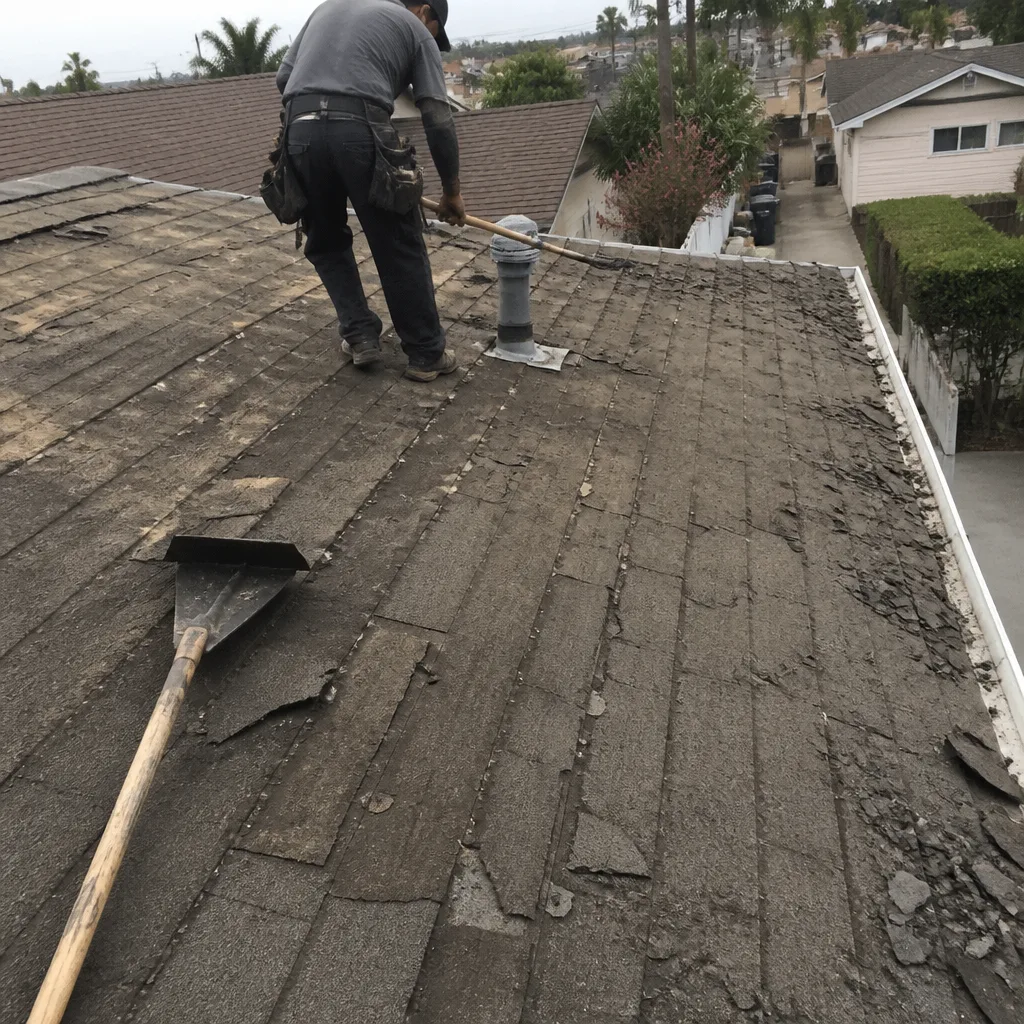
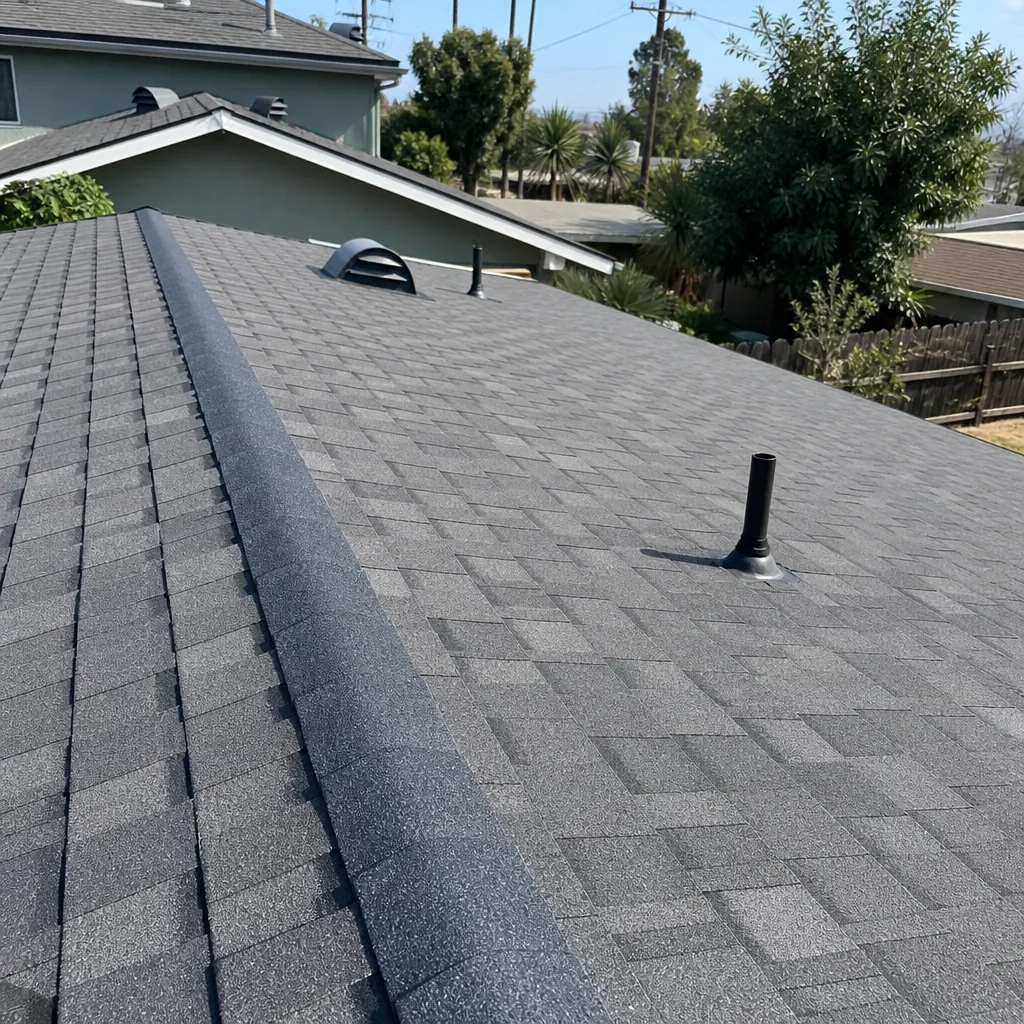
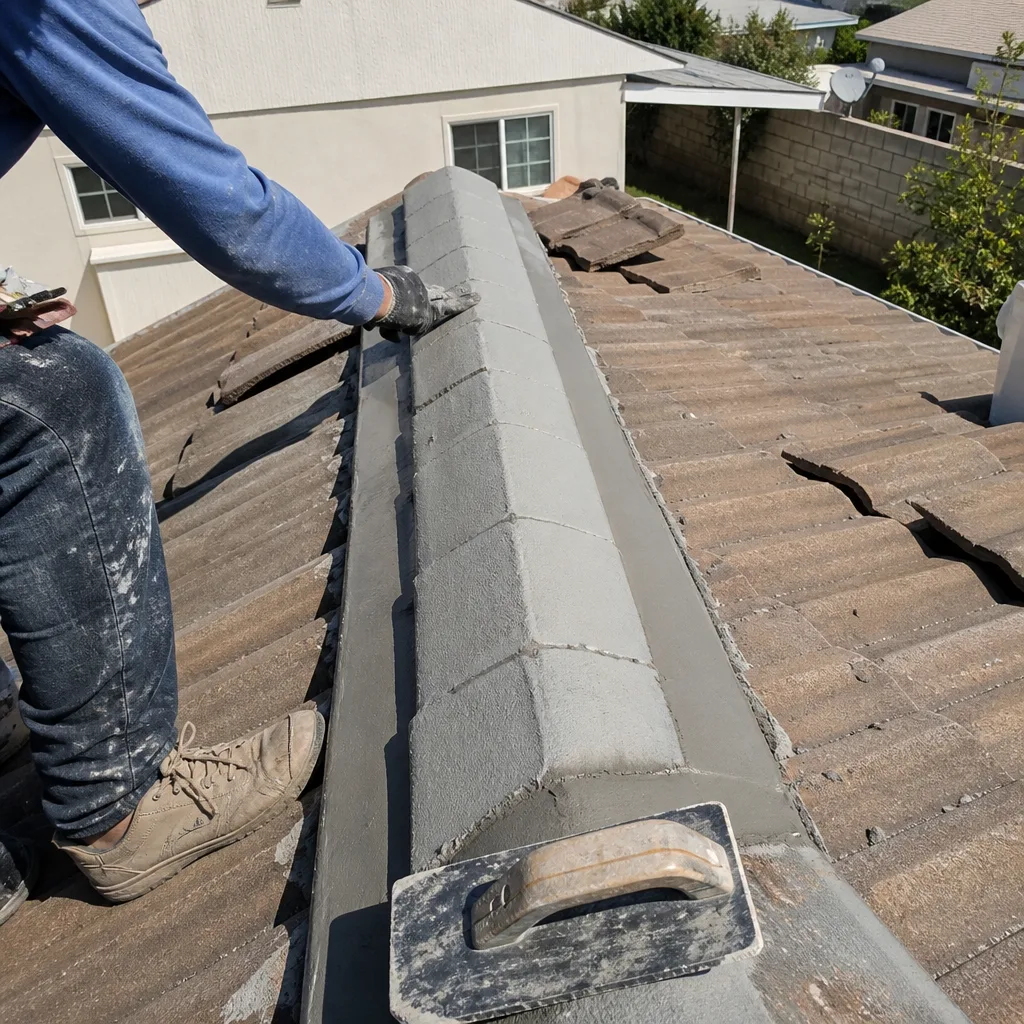
See the difference
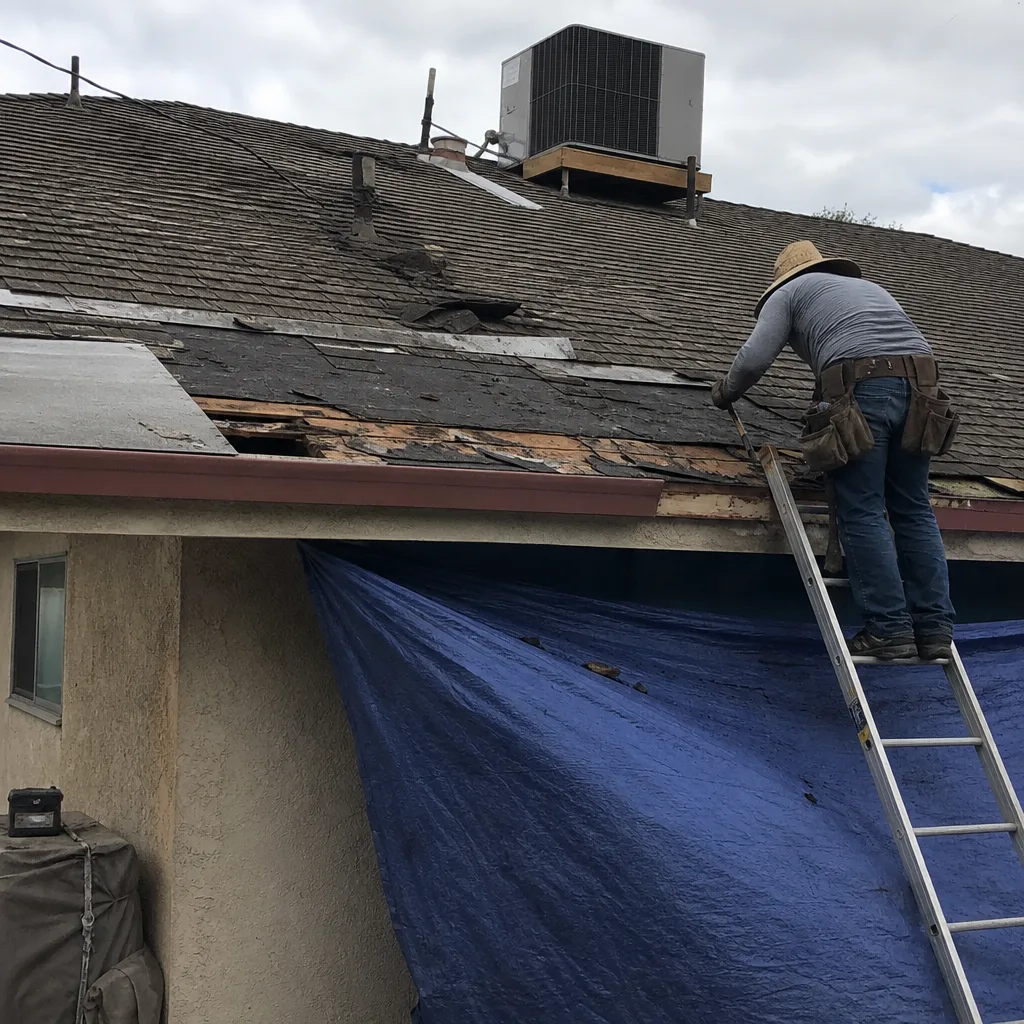 Before
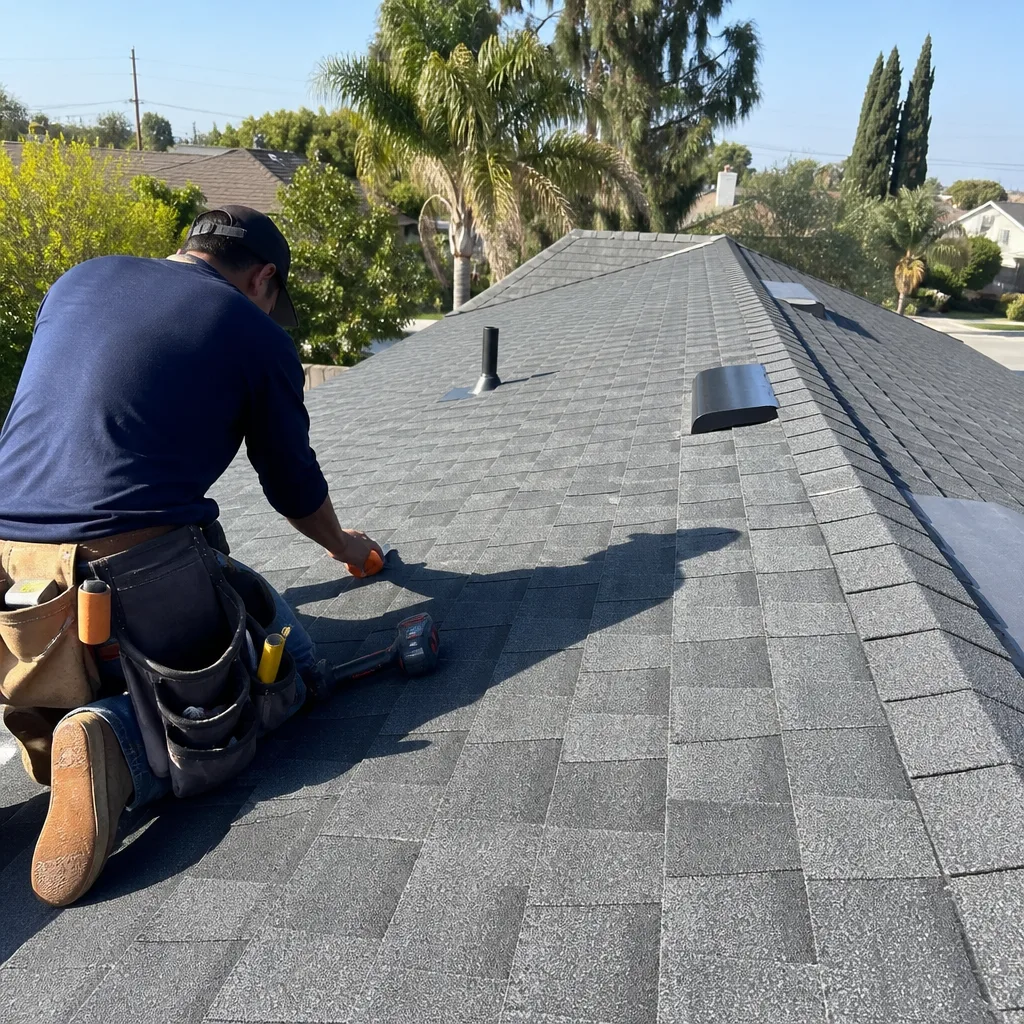 After
 Before
 After
 Before
 After